

Josh's Frogs
Why you should buy from us
Hawaiian Blue Gold Dust Day Gecko - Phelsuma laticauda laticauda (Captive Bred)
Hawaiian Blue Gold Dust Day Gecko - Phelsuma laticauda laticauda (Captive Bred)
$189.99
About This Product
Defining characteristics:
- Beautiful colors
- Diurnal
- Active day gecko
- Excellent display animal
- Great beginner day gecko
Name: Phelsuma laticauda laticauda. Known as the gold dust day gecko for the speckled gold coloration on their back.
Recommended Enclosure Size & Setup: A single animal can be kept in a 12x12x18 enclosure. Pairs have been successfully kept and bred in this size enclosure, although a pair will appreciate an 18x18x24 glass enclosure.
A bioactive setup with live plants is strongly recommended for this species; Josh's Frogs Tropical BioBedding is recommended to maintain live plants, springtails, and isopods. Provide plenty of climbing material in the form of cork bark, branches, or bamboo for this arboreal species.
Temperature (°F): Keep gold dust day geckos between 75-80°. A basking spot of around 90°F is also recommended. Night temperatures should not fall below 65 F. Gold dust day geckos should also be provided with a 5.0 or similar strength UVB light.
Temperature should be monitored with a digital thermometer.
Humidity: Gold dust day geckos should be provided a humid but well-ventilated setup between 60-70%. Live plants can be added to help stabilize higher humidity as well as provide humid microclimates. Ambient humidity should be monitored with a digital hygrometer. Gold dust day geckos should be misted daily to provide dew on enclosure walls and cage items from which they can drink. A water dish can be provided but is not necessary with regular misting; a water dish will not replace the need to regularly mist the enclosure.
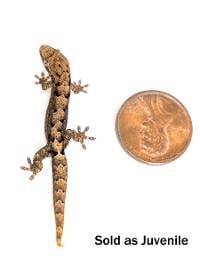
Size: Gold dust day geckos reach around 4.5-6 inches as adults.
Age: Blue Hawaiian gold dust geckos are at least 4 weeks old when sold by Josh’s Frogs, at which time they are well established. It is estimated that these geckos may live for up to 10 years in captivity.
Feeding: Gold dust day geckos are omnivores, eating both insects and fruit in the wild. In captivity, they will thrive on a diet of gecko diet mix and feeder insects. Hatchlings and juveniles should be offered 1/8 inch crickets or fruit flies until they are large enough to eat 1/4 inch crickets. Providing mounted feeding cups for this arboreal species is recommended. Other appropriately sized feeder insects, like dubia roaches and black soldier fly larvae, can also be offered but need to be provided in a food dish to be accessible. Waxworms, butterworms, and small hornworms make excellent treats, but should only be offered occasionally. Feeder insects should be dusted with a calcium and multivitamin supplement.
Sexing: Gold dust day gecko males can be identified by their femoral pores, which are located between the hind legs. Females lack these pores.
Color/Pattern: Standard gold dust day geckos are green. They have 3 interrupted red lines on their lower back, along with 3 bands across their head. Hawaiian blues are still primarily green, but with an electric blue/teal coloration on their head, down the flanks, and along their tail. This gecko's most notable characteristics are the small gold-colored speckles across their back, giving them the impression that they’ve been “dusted” with gold.
Social Behavior: House solo or as a pair when using a smaller enclosure. Males should never be housed together. Females can also be aggressive towards one another if not provided enough space; a minimum of an 18x18x24 enclosure should be used when housing the same sex in an enclosure together.
Breeding: Gold dust day geckos lay 2 eggs every 3-4 weeks during the breeding season. Eggs are loose and usually not adhered to a surface. Despite their larger size, we have successfully used egg-laying tubes with them.
Natural Range: Gold dust day geckos are found in northwestern Madagascar. A non-native population has been introduced and established in Hawaii as well.
History in the Hobby: Gold dust day geckos are fairly common in the hobby; their incredible colors, low price, and hardiness make them excellent beginner day geckos.
Links of Interest:
- Gold dust day gecko care sheet from Reptiles Magazine
Shipping
After placing an order containing a live animal, you will receive a scheduling email containing our JotForm scheduling link to schedule your new pet's delivery date.
With this scheduling link, you will be able to schedule your order's delivery up to 30 days in advance. You will be able to choose a date of delivery for Tuesday-Saturday (Saturday arrival depends on the carrier's service availability) with the estimated time of arrival generally being 12pm, or 4:30pm for more rural areas. Overnight lows must be above 40°F to ship directly to you (or above 30°F for FedEx Ship Center/UPS Customer Center pickups) as well as below 90°F by estimated time of arrival.
If you require further assistance, or prefer to talk to one of our Customer Service agents, please feel free to reach out to our [email protected] email or our phone line 1-800-691-8178.
Import/export restrictions on this product require that it can only be shipped to destinations within the United States.
Restrictions on this product that prohibit shipping to the following states: HI.
Other Customers Also Bought

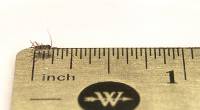
1/8" Banded Crickets (250 Count)
$11.99
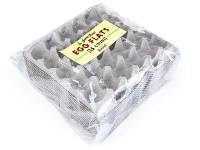





Egg Flat (Single)
$0.69



1/8" Banded Crickets (500 Count)
$13.99
Customer Reviews
Review data
5 star reviews
- 0%
4 star reviews
- 0%
3 star reviews
- 0%
2 star reviews
- 0%
1 star reviews
- 0%
Reviews
1-800-691-8178

Our Team
Josh's Frogs ©2020 - 2026 by Josh's Frogs, LLC.