

Josh's Frogs
Why you should buy from us
Green Mantella Care
How to care for and breed Mantellas
Defining Characteristics
- Great beginner frogs
- Many colorful morphs
- Small but bold
- Easy to Keep
- Moderate trilling call
- Can be kept in groups (same morphs)
- Challenging to breed
Name
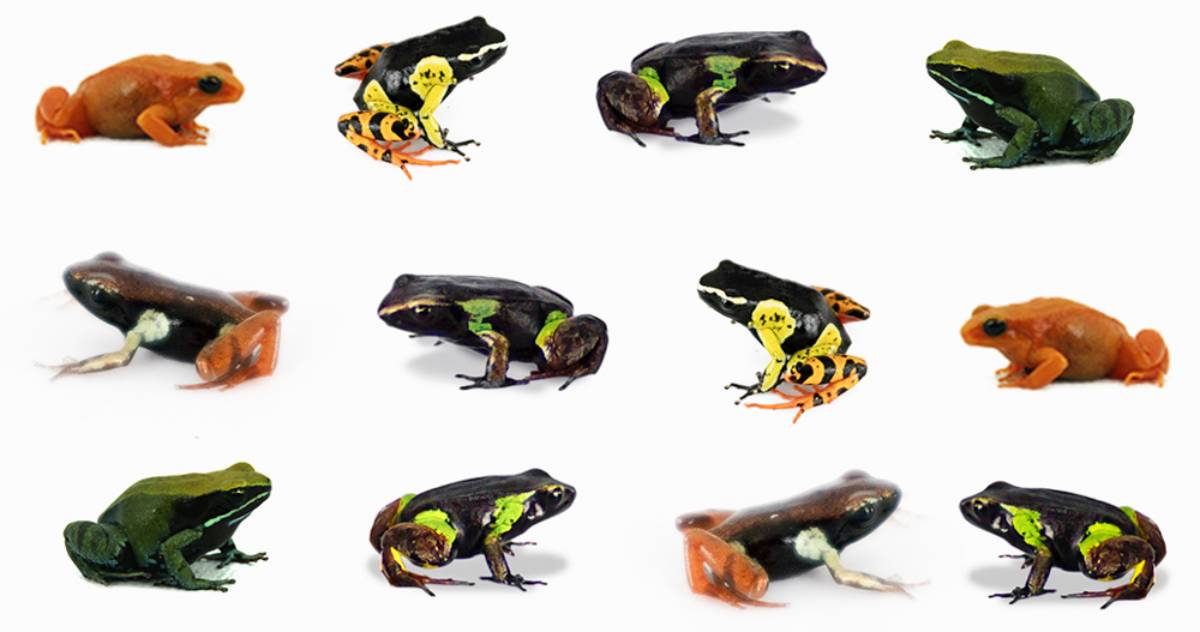
Josh's Frogs works with a variety of mantella—the Bronze Mantella (Mantella betsileo), Green Mantella (Mantella viridis), Golden & Amelanistic Mantella (Mantella aurantiaca), Painted Mantella (Mantella baroni), and the Beautiful Mantella (Mantella pulchra).
The name "Mantella" doesn't have a specific meaning in Latin (or any other language) that directly relates to the frogs' characteristics. Instead, it was established by George Albert Boulenger in 1882 to better organize the classification of certain frogs found in Madagascar.
Recommended Vivarium Size
Housing green mantellas can be very simple. A 10 gallon aquarium can house a couple individuals, while a glass terrarium with a footprint of 18x18 or larger could house 4-6 mantellas. These frogs seem to be completely passive towards each other for the most part (outside of the breeding season), and do great in groups. A screen top with daily mistings will maintain the perfect balance of ventilation and humidity.
Substrate recommendations vary considerably, but long fiber sphagnum moss works well for our mantellas here at Josh’s Frogs. Alternatively, you can set up a vivarium using Josh’s Frogs naturalistic vivarium substrates, similar to keeping dart frogs. Provide items for your green mantellas to hide under, such as a cork bark flat or leaf litter. Your Mantella viridis will spend much of the time hiding under such objects.
A shallow water bowl should be provided as well. Green mantellas are not particularly arboreal, but they will appreciate a small bit of vivarium wood or live terrarium plants to climb on.
Lighting is needed for any live plants provided, but is not required by green mantellas. Although there's no evidence that Mantella viridis benefit from UVB lighting, a low level UV bulb, such as a 2.0 UVB bulb, may be beneficial. Based on observations of green mantellas being active during the day in the wild in partial sunlight, a low level UVB source would probably be a good idea.
Temperature
Mantella viridis ideally are kept at about room temperature, in the low to mid 70s. Unlike many other mantellas, green mantellas stress easily in hot temperatures over 80°F. Avoid warmer temperatures at all cost.
Humidity
Green mantellas can handle a wide range of humidity levels, but prefer a humidity level of 60-70%. Routine spraying and a full screen top will aid in providing proper humidity levels. Be sure to provide a shallow water dish so that your green mantellas will not dry out in lower humidity. During the breeding season, green mantellas can experience humidity levels up to 80% without issue.
Size
Adult green mantellas are not very large, and there is a small size different between males and females. An adult male may reach about 1 inch, but most will be closer to 3/4 of an inch. A large female will be a bit larger and much bulkier (or 'pear shaped') than a male, and may measure up to 1.25 inches. All of the Mantella viridis froglets Josh's Frogs sells are well started juveniles, and measure approximately 1/2 - 3/4 of an inch long.
Age
There is not any good data surrounding the average lifespan of green mantellas, but wild caught animals have lived in captivity for over 5 years. All Green Mantellas for sale at Josh's Frogs are well started juveniles, and are 2-3 months old. Keep in mind, at this age froglets will have very different color and patterns than they will as adults.
Feeding
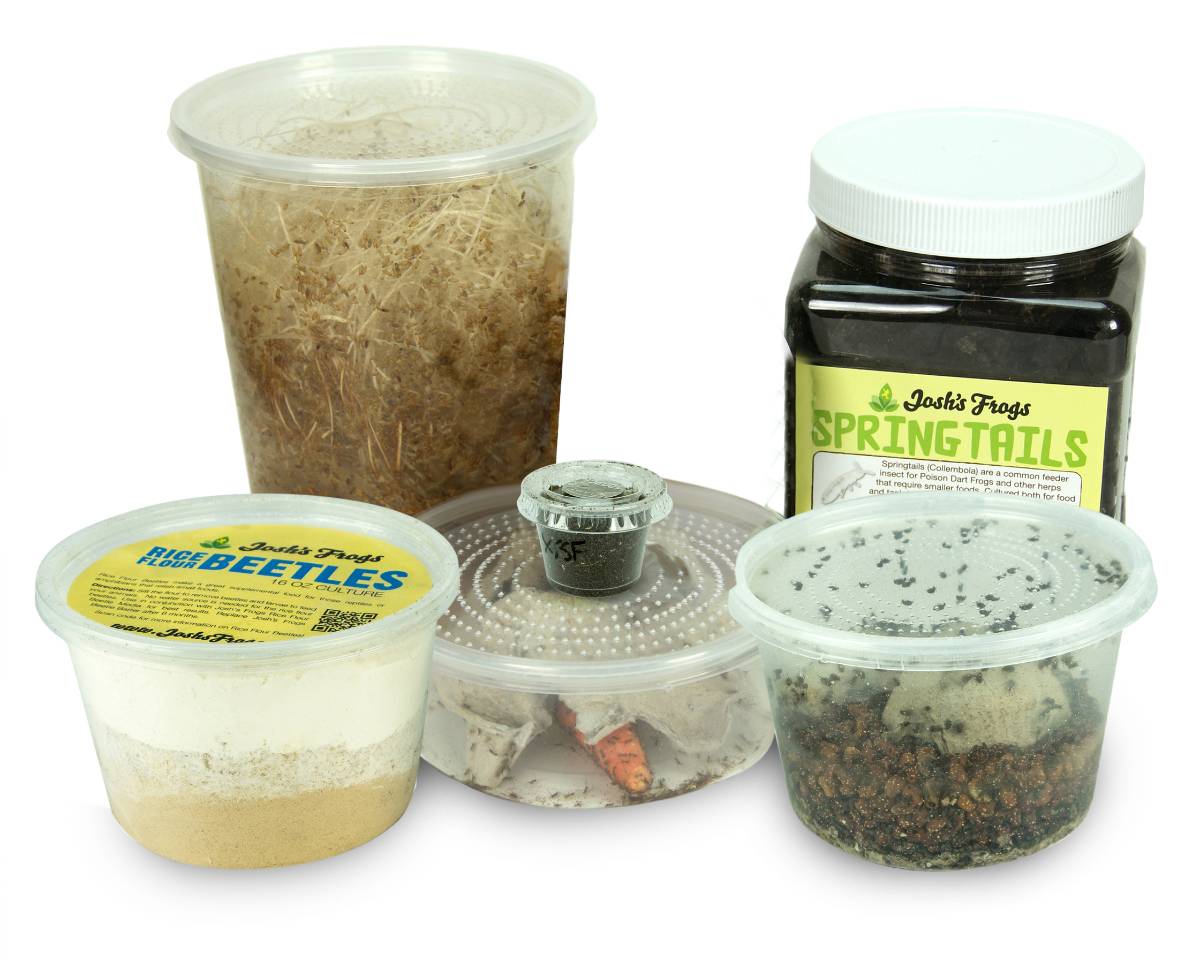
Green mantellas are microphagus, meaning that they consume small food items. Mantella viridis do quite well on easily procured prey items in captivity. At Josh’s Frogs, we feed our adult green mantellas primarily hydei fruit flies, as well as springtails, isopods, extra small black soldier fly larvae, and 1/8 inch crickets. Young green mantellas start life feeding on baby springtails. At the size Josh’s Frogs sells captive bred Mantella viridis, they are eating melanogaster fruit flies and 1/8 inch crickets. All prey items should be dusted with a quality vitamin/mineral supplement.
Sexing
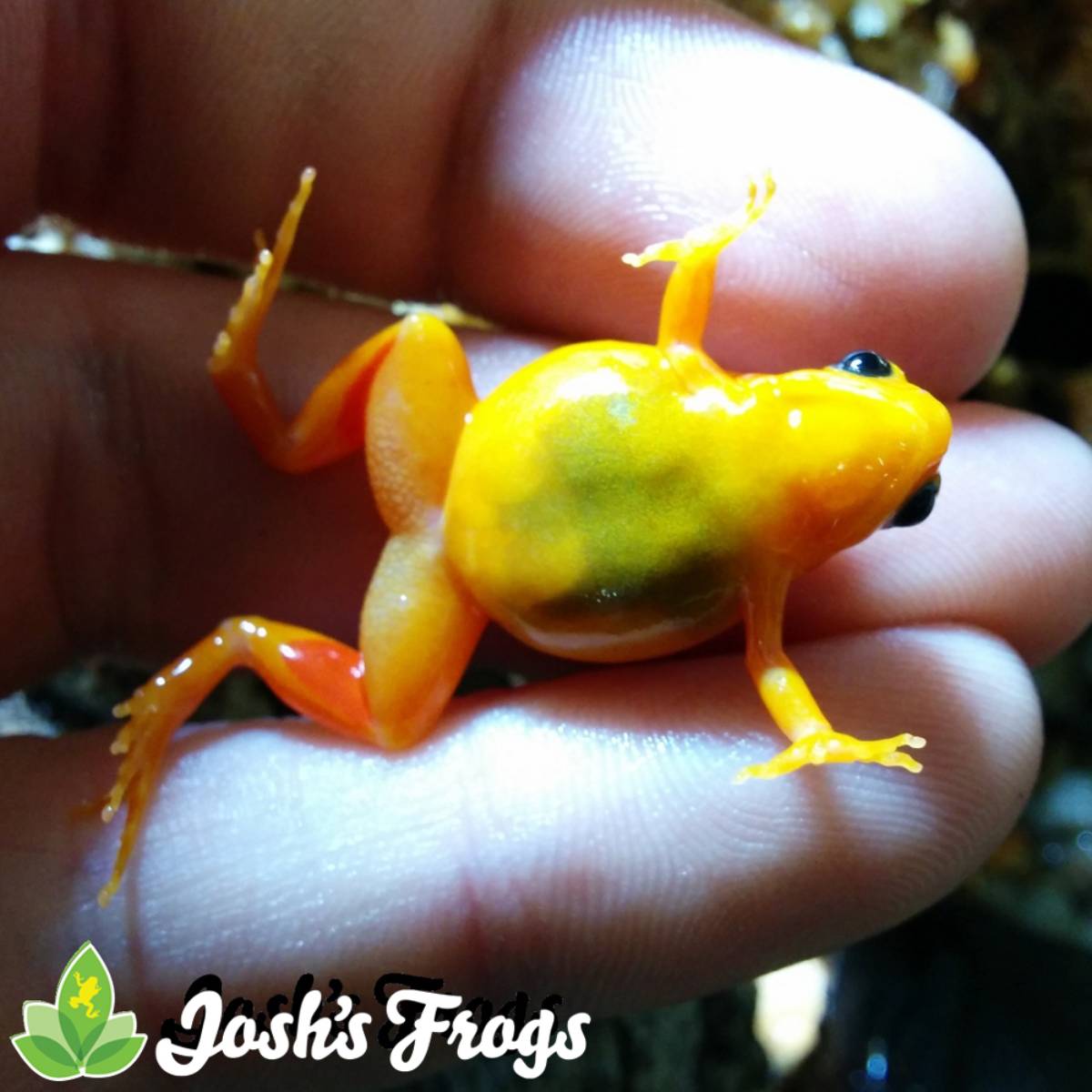
Sexing adult green mantellas can be fairly straightforward once they're older, but can be difficult on younger animals. Once the mantellas are about 10-12 months old, they display obvious sexual dimorphism. Females are about 1/5 times larger then males, and much more rotund. Males are smaller, more slender, and typically call when kept in a wet or more humid environment. Reportedly, male green mantellas tend to be more skittish than females. A green mantella’s call resembles that of a canary, and is very melodious.
Color/Pattern
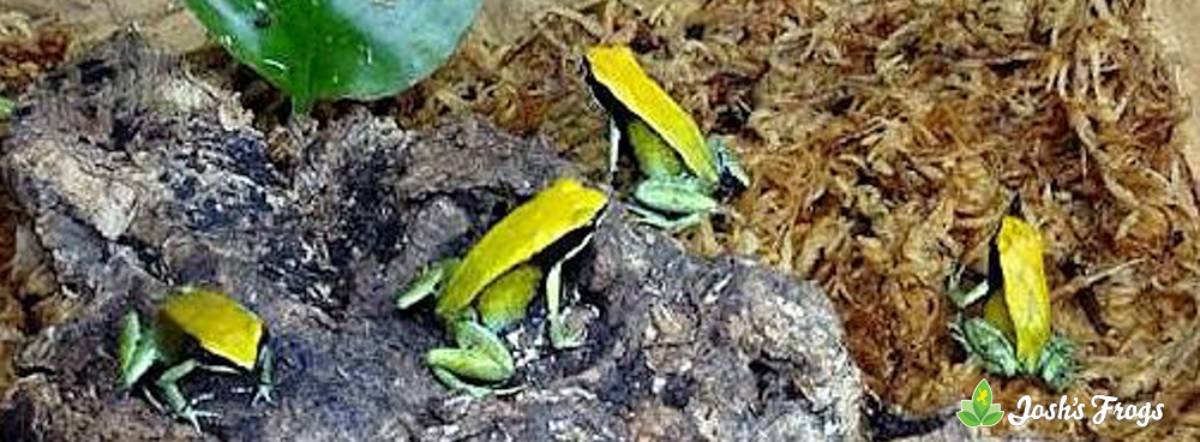
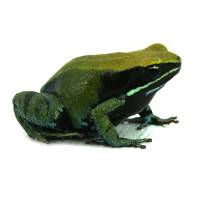
Adult green mantellas are primarily green, sometimes with a bit of yellow. 2 color phases seem to occur - it is possible these are 2 separate populations in the wild. Perhaps they will be classified as different species or subspecies in the future. At Josh's Frogs, we work with the bright green/teal variety. Most individuals have a black partial facemask, and a black/dark brown belly with blue/white blotches. A trademark of the species is a horseshoe shaped bit of color on the throat area, which traces the lower jaw. Younger green mantellas can range from yellow to brown to almost red, with a darker X pattern on their back. Juvenile Mantella viridis will achieve adult coloration at 8-12 months of age.
Social Behavior
Mantellas are generally well behaved in groups. However, adult females can fight with each other during breeding season. Keeping a group in a large enough vivarium with plenty of visual barriers tends to negate this behavior. Overall, mantellas are a great group frog—just be sure to keep all of the same morph and don't mix different locales within the same enclosure.
Breeding
Breeding Mantellas can be a bit challenging. In our experience, patience is key, as is a decent sized group that is female heavy. At Josh's Frogs, we managed to produce several healthy clutches with a group of 1.5 (1 male, 5 females). Cycling is important. We reduced mistings by half to allow the mantella habitat to dry out a bit, ensuring clean water was always available to the animals in a shallow water dish during this time. Feeding was reduced by about half as well. This artificial dry season was maintained for 3-4 months. It was followed by a 6 month return to daily misting and heavy feeding. Within a few days of more frequent mistings, the male could be heard calling.
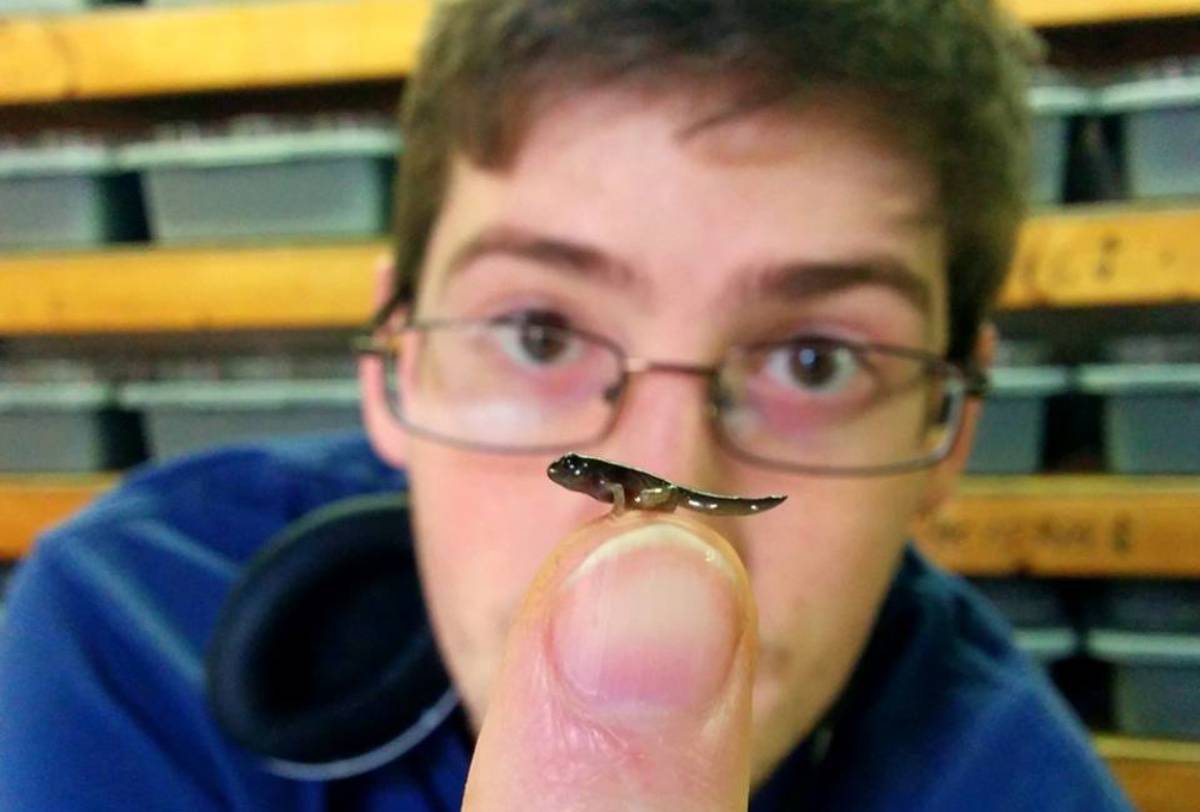
Less than 2 weeks into the artificial rainy season, an egg clutch of approximately 40 eggs was discovered under a piece of cork, buried about 1 inch into the sphagnum moss substrate. 2-3 of the females in the group produced eggs, and we were able to get about 10 clutches this season. Eggs are removed and kept on damp sphagnum until they hatch and small, white/gray tadpoles are seen squirming through the egg jelly. Water is then added to the container, flooding the egg clutch and allowing the tadpoles to swim free. After a few days, the tadpoles are removed with a turkey baster and placed in an aged 20H aquarium with undergravel and sponge filters.
At 74°F, mantella tadpoles will eagerly consume a wide variety of foods, from brine shrimp flake to Repashy Savory Stew. After 6-8 weeks, they will develop limbs and begin to leave the water. Newly morphed mantellas will quickly consume springtails and grow very fast.
Natural Range
Mantellas are only found on the island of Madagascar off the coast of Africa. These frogs inhabit a range of environments, such as swampy forests, seasonal streams, and wet canyons. They prefer areas with ample coverage, such as leaf litter, rock crevices, and dense vegetation. Some species also spend time in trees and bamboo forests.
History in the Hobby
Green mantellas have been available as wild caught animals since the early 1990s, but captive bred animals remain rare. Unfortunately, most imports were doomed in captivity due to primitive importation and shipping methods, as well as a lack of general knowledge surrounding their care. They're no longer exported in large numbers from Madagascar legally for the pet trade, as they have been classified as endangered.
Links of Interest:
- IUCN Redlist article for Mantella viridis
- Wikipedia article on Green Mantellas. Poor information, but a great picture of the yellow/brown phase.
- Mantella FAQ by Marc Staniszewski, the leading mantella expert in the UK.
- Mantella viridis Care by Devin Edmonds of Amphibiancare.com
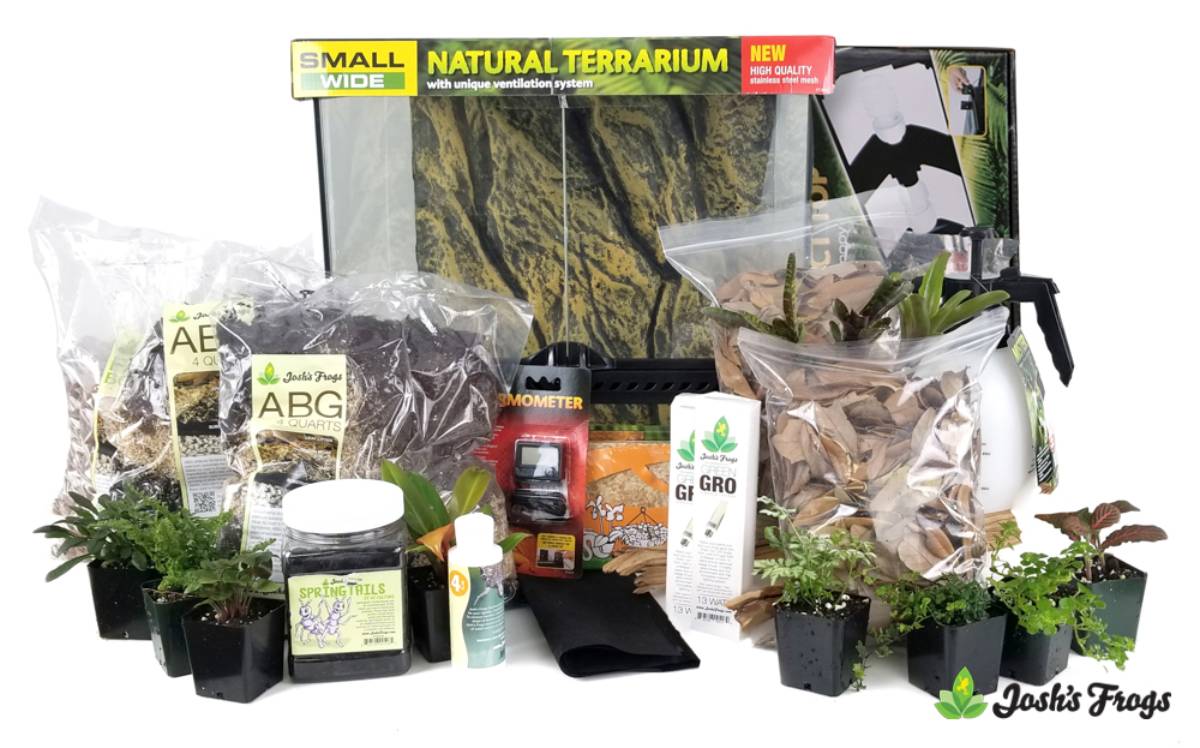
Make caring for your mantellas easy with our Mantella care kit!
Check out our YouTube video on mantellas! Green, Bronze, Beautiful, Golden, and Painted Mantellas, Oh My!
Products in this Care Sheet
1-800-691-8178

Our Team
Josh's Frogs ©2020 - 2026 by Josh's Frogs, LLC.