

Josh's Frogs
Why you should buy from us
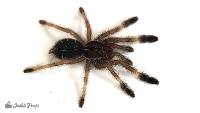
Pumpkin Patch Tarantula - Hapalopus formosus | 1/4 inch (Captive Bred)
Pumpkin Patch Tarantula - Hapalopus formosus | 1/4 inch (Captive Bred)
$39.99
About This Product
Environmental Caution:
When a damp environment has too little air circulation, this can lead to an anaerobic environment. Where the typical aerobic bacteria helps keep certain types of waste from building up, they are instead replaced by anaerobic bacteria whose waste is more likely to be toxic and harmful. This is often accompanied by a strong swampy smell.
To guard against anaerobic environments, it is important to monitor and control moisture in the environment as well as air quality. One way to maximize both is to have plentiful live plants as the byproduct of photosynthesis is oxygen and water. Springtails can help keep the substrate aerated and break down waste so that the beneficial bacteria can more easily turn it into plant food.
Defining Characteristics:
- Formerly known as Hapalopus sp. Colombia 'Large', this was changed when the genus was revised
- A species of dwarf tarantula, rarely growing larger than a 3 inch diagonal legspan
- This species loves to cover everything in their habitat in a thick layer of silk webbing
Name: Hapalopus formosus is commonly known as the Pumpkin Patch Tarantula. The genus translates to "delicate" (hapalo-), and "foot" (-pus). The species epithet formosus means "beautifully formed," "shapely," or "handsome." The common name references the spider’s orange spots and black patterning on its abdomen which somewhat resemble a group of pumpkins.
Recommended Enclosure Size & Setup: Hapalopus formosus is a terrestrial species, but also an opportunistic burrower, so extra substrate will be appreciated. Surface area of the enclosure should be no less than 2 times the spider's diagonal leg span in one direction and 3 times the diagonal leg span in the other. We recommend against allowing your terrestrial spider more than 2 times their diagonal leg span as head space above their substrate as a fall from any higher could result in serious injury.
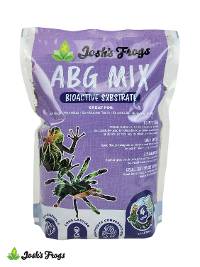
Given the burrowing nature of this species, the enclosure should be tall enough to accommodate 2-3 inches of substrate for slings and 5+ inches for adults. Arachnid BioBedding is our top pick for substrate, as it was developed specifically with the needs of tarantulas in mind! ABG Mix, coco cradle, or Dig-It are good substrate options, as well.
We recommend against allowing your terrestrial spider more than 2 times their diagonal leg span as head space above their substrate, as a fall from any higher could result in serious injury.
They will benefit from a variety of terrarium furniture as well to climb on and foliage to hide behind. Live plants can be beneficial to air quality.
Temperature (°F): This species thrives in the mid 70s to low 80s, so a temperature close to 80° is ideal. Temperatures regularly dipping below 65 or spiking above 85 degrees should be avoided. A reliable thermometer is strongly recommended.
Humidity: These spiders thrive in a humid environment, so the recommended ambient humidity should stay between 60 and 75%. This can be achieved by making sure the substrate is always at least slightly moistened. Depending on your location, you may need tools such as a humidifier to maintain this environment.
The enclosure sides and décor should be spritzed at least lightly around twice a week to provide your animal droplets to drink from, but do not spray your spider directly. A hygrometer is a great way to monitor the humidity for your animal and see any needed adjustments.
Size: At the time of sale, these specimens are at least 1/4 of an inch. Females can grow to be up to 3 inches, and typically the males are a bit smaller. We use diagonal leg span to measure our spiders.
Age: Before making this species available to our customers, we ensure that they are well-established. This means our spiders are generally molted to a minimum of third instar and will have hatched 2 to 3 months prior to being listed for sale.
For spiders that we have not produced in house, we like to get 2 to 3 solid feedings in as well as the aforementioned minimums. They go through a 2-week minimum quarantine process to ensure the health of the animal.
For this species, the average lifespan is 2 to 4 years in males, and 8 - 10 years in females when provided an adequate environment. They are currently approximately 3 to 6 months old.
Feeding: At the time of sale, these spiders are eating 3 to 6 hydei fruit flies once a week. Prey items should be no larger than the size of the spider’s abdomen, and grow in size as the animal does. There are a variety of appropriate prey items that you can offer, such as roaches, waxworms, black soldier fly larvae, hornworms, and silkworms.
We recommend that the prey items not be much longer than the tarantula's “head” is wide. Larvae are an exception—our larvae are harmless. Since they are very high in fat, they're not the best staple diet, however they make a great weight gain supplement.
Remove uneaten prey items after 24 hours, these may stress your animal out or endanger the spider during molting. Never attempt to feed a freshly molted tarantula less than a week after their molt to prevent injury to the spider. Depending on its age, the hardening process could take anywhere from 48 hours all the way up to a week.
Sexing: Due to age, Hapalopus formosus sold by Josh’s Frogs are sold as unsexed.
Check out our individually listed spiders to see if we have what you’re looking for!
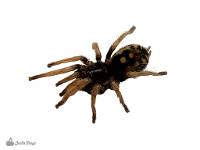
Color/Pattern: These spiders have a light brown or tannish body and legs, with an abdomen sporting several orange spots (the titular “pumpkin patch”) separated by black.
Social Behavior: Hapalopus formosus is not a sociable animal and should be housed as an individual. Attempts at cohabitation can result in cannibalism.
This species spends most of its time underground, in a silk lined burrow. They're quick to bolt to the nearest hiding place.
Natural Range: Hapalopus formosus is native to the tropical rainforests and grasslands of Colombia, South America.
History in the Hobby: This species has been a regular in the hobby since around 2010. It was thought to come in 2 forms. Hapalopus sp. ‘Colombia Groot (or Gross)’ was the larger form, now known as Hapalopus formosus. Hapalopus sp. ‘Kolombia Klein’ was the smaller form, now known as the Munchkin Patch Tarantula and has not been properly taxonified yet.
Links of Interest:
Still not sure if Hapalopus formosus from Josh's Frogs is the right pet for you? Read the reviews below and see what other customers are saying!
Shipping
After placing an order containing a live animal, you will receive a scheduling email containing our JotForm scheduling link to schedule your new pet's delivery date.
With this scheduling link, you will be able to schedule your order's delivery up to 30 days in advance. You will be able to choose a date of delivery for Tuesday-Saturday (Saturday arrival depends on the carrier's service availability) with the estimated time of arrival generally being 12pm, or 4:30pm for more rural areas. Overnight lows must be above 40°F to ship directly to you (or above 30°F for FedEx Ship Center/UPS Customer Center pickups) as well as below 90°F by estimated time of arrival.
If you require further assistance, or prefer to talk to one of our Customer Service agents, please feel free to reach out to our [email protected] email or our phone line 1-800-691-8178.
Import/export restrictions on this product require that it can only be shipped to destinations within the United States.
Restrictions on this product that prohibit shipping to the following states: HI.
Customer Reviews
Based on 1 review
Review data
5 star reviews
- 100%
4 star reviews
- 0%
3 star reviews
- 0%
2 star reviews
- 0%
1 star reviews
- 0%
Reviews
Chase
Healthy Looking Sling
My Pumpkin Patch Tarantula arrived looking very healthy and not even at all stressed about being mailed. It was very safely packaged and it calmly walked out of the little ball of moss it was nestled in after I unwrapped everything.
Showing 1 to 1 of 1 results
1-800-691-8178

Our Team
Josh's Frogs ©2020 - 2026 by Josh's Frogs, LLC.