Josh's Frogs
Why you should buy from us
Bumble Bee Toad Care and Breeding
Keeping and Breeding the Bumblebee Toad (Melanophryniscus klappenbachi) in Captivity
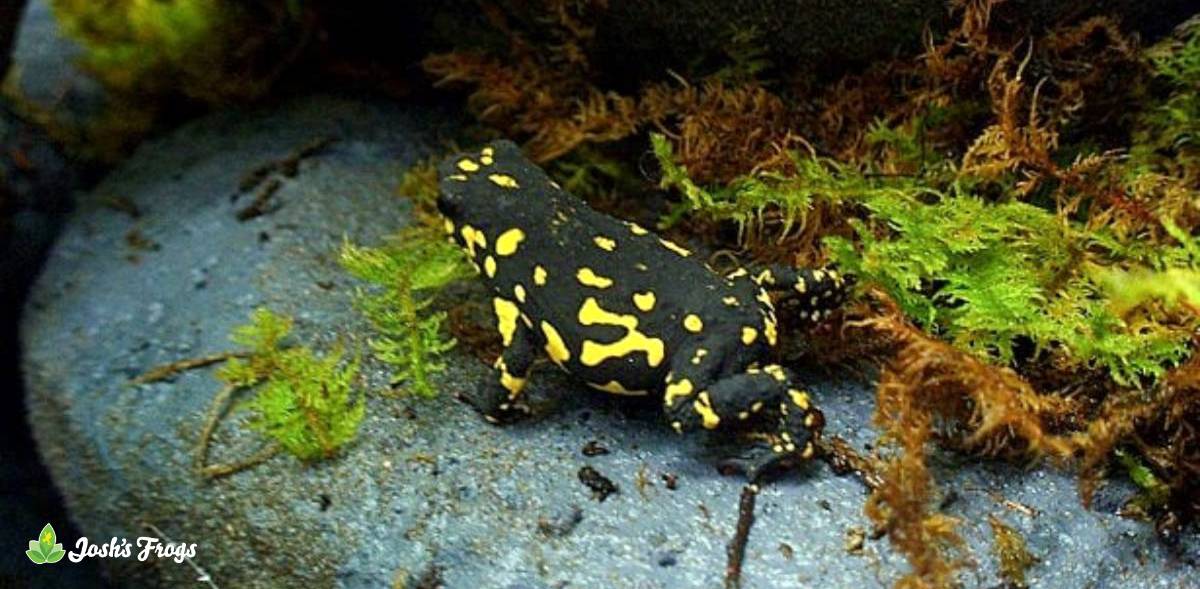
Bumblebee Toads are a colorful, easy-to-care-for amphibian.
Introduction
Bumblebee Toads are amazing little black and yellow toads with red feet and rumps. Bumblebee toads are known for their bright coloration and their ambling gait, as opposed to the traditional hopping or jumping of most frogs or toads. Traditionally imported from Paraguay in huge numbers, bumblebee toads are exceptionally susceptible to a 'boom and bust' cycle in the pet trade, where they are commonly available when they are coming in, then suddenly rare after imports stop.
Due mainly to the low price of wild-caught animals and difficulties in captive-breeding and rearing of their young (they're tiny!), bumblebee toads have virtually disappeared from the US pet trade several times. In fact, imports just stopped again after several years of importing. This, along with a need to reduce the demand on wild populations, are the primary reasons Josh's Frogs has dedicated considerable time and effort to developing a breeding program. 
Bumblebee toads are also known as red-bellied toads, due to their ventral coloration. In captivity, this reddish coloration is often lost.
Bumblebee Toad Taxonomy
Bumblebee toads have several common names, including Bumblebee Walking Toads, Paraguay Walking Toads, Yellow and Black Walking Toads, and Red-bellied Toads (which appears to be the common name most used by field researchers).
After careful review, we've determined the bumblebee toads present in the US hobby are Melanophryniscus klappenbachi, and not M. stelzneri as they were imported as. The taxonomic history of bumblebee toads in the scientific literature is as follows:
- Phryniscus stelzneri (Weyenbergh 1875)
- Atelopus stelzneri (Boulenger 1894)
- Bufo stelzneri (Noble 1922)
- Dendrophryniscus stelzneri (Noble 1926)
- Melanophryniscus stelzneri stelzneri (Gallardo 1961)
- Melanophryniscus klappenbachi (Prigioni and Langone 2000)
Natural Habitat of Bumblebee Toads
The bumblebee toads currently in the hobby all originate from Paraguay, although the species occurs additionally in Brazil, Uruguay, and northern Argentina. Habitat description in Paraguay is lacking, but some report bumblebee toads inhabit the Pampas, a hilly grassland that stretches from southern Brazil to northern Argentina. The Pampas grasslands are drier and cooler than rainforest, and experience both temperature and precipitation differences in different seasons. Summer temperatures range from 75-90F, while winter temps range from 40F-60F.Come spring, bumblebee toads travel to small, possibly temporary bodies of water (aka vernal ponds) to reproduce. The resulting sudden population explosion is taken advantage of by collectors – most wild caught bumblebee toads are collected as they cross roads, and are typically not quite sexually mature. It is believed that wild bumblebee toads take 1-2 years to reach sexual maturity. Reportedly, bumblebee toads live in the hills at 500 to 1000 meters above sea level, and may take advantage of humid microclimates that are created under tufts of pampas grass. Termites are often cited as the primary food source of bumblebee toads in the wild.
Adult Size of Bumblebee Toads
Adult bumblebee toads are not very large, and there is a drastic size different between males and females. An adult male may reach about 1 inch, but most will be closer to 3/4 of an inch. A large female will be much larger and bulkier than a male, and may measure up to 1.5 inches.
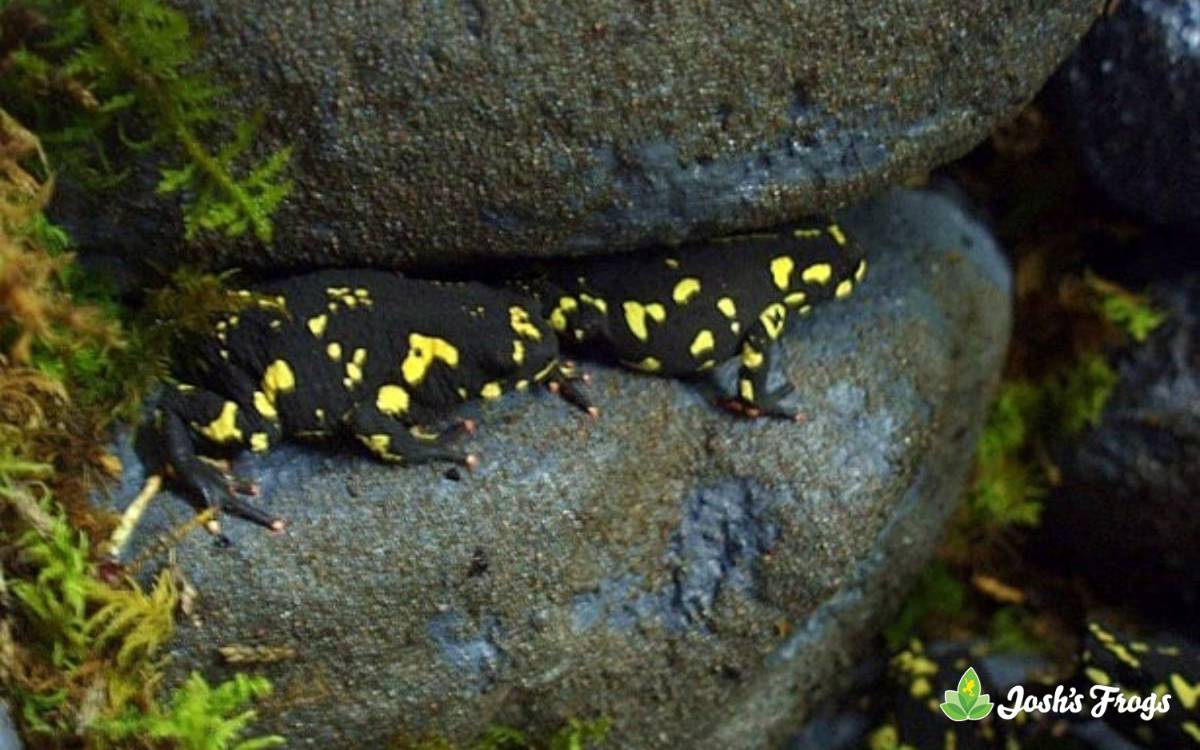
Bumblebee toads are small frogs, not getting over 1.5 inches. (Female BBT being introduced to rain chamber)
Natural Lifespan of Bumblebee Toads
There is not any good data surrounding the average lifespan of bumblebee toads, but wild caught animals have lived in captivity for 10 or more years.
Status in the Wild of Bumblebee Toads
In the wild, bumblebee toad populations are stable, and considered a species of least concern due to their widespread habitat and strong population numbers. Bumblebee toads are very adaptable in their breeding habits, and has adapted well to human encroachment on it's habitat in the wild. Bumblebee toads are explosive breeders, producing hundreds of eggs in a single clutch. In many places, bumblebee toads frequently breed in rice paddies or roadside ditches.
History of Bumblebee Toads in the Hobby
Bumblebee toads have an unfortunately dismal track record in the US pet trade. Several times, typically many years apart, bumblebee toads are available as wild-caught imports cheaply and in huge numbers. Thus, they were often viewed and sold as curiosities to keepers unfamiliar with their care needs, and viewed as disposable pets. Similar in appearance to dart frogs, bumblebee toads are often kept like dart frogs.
Even though they do have many similar characteristics, such as a microphagus eating habit (they require small foods) and aposematic (warning) coloration, bumblebee toads kept at the same high humidity as dart frogs are doomed. As a result, availability of bumblebee toads declined drastically as soon as imports stopped. Within a year or so after importation ended in the early 2000s, prices skyrocketed from about $10 each to well over $200 apiece.
When bumblebee toads are cheaply and widely available as wild caught imports, few if any people attempt to breed them in captivity. These frogs, while not impossible to breed, are certainly not easy. An understanding of their natural history, as well as mastery of culturing small prey items, are required to be successful. Fortunately, the staff at Josh's Frogs has long ago mastered the culturing of microfeeders, such as springtails and fruit flies.
Luckily, a strong scientific background has also allowed us to sufficiently research the genus Melanophryniscus to an extent not formerly replicated in the pet trade. We've been able to successfully raise bumblebee toads through their entire life cycle, and in large numbers.
Captive Husbandry of Bumblebee Toads
Bumblebee toads offer a bit of a paradox. Often considered easy captives, bumblebee toads seem virtually indestructible at first, only to then experience a sudden decline. Truth be told, bumblebee toads are easily kept in captivity, as long as several guidelines are met.
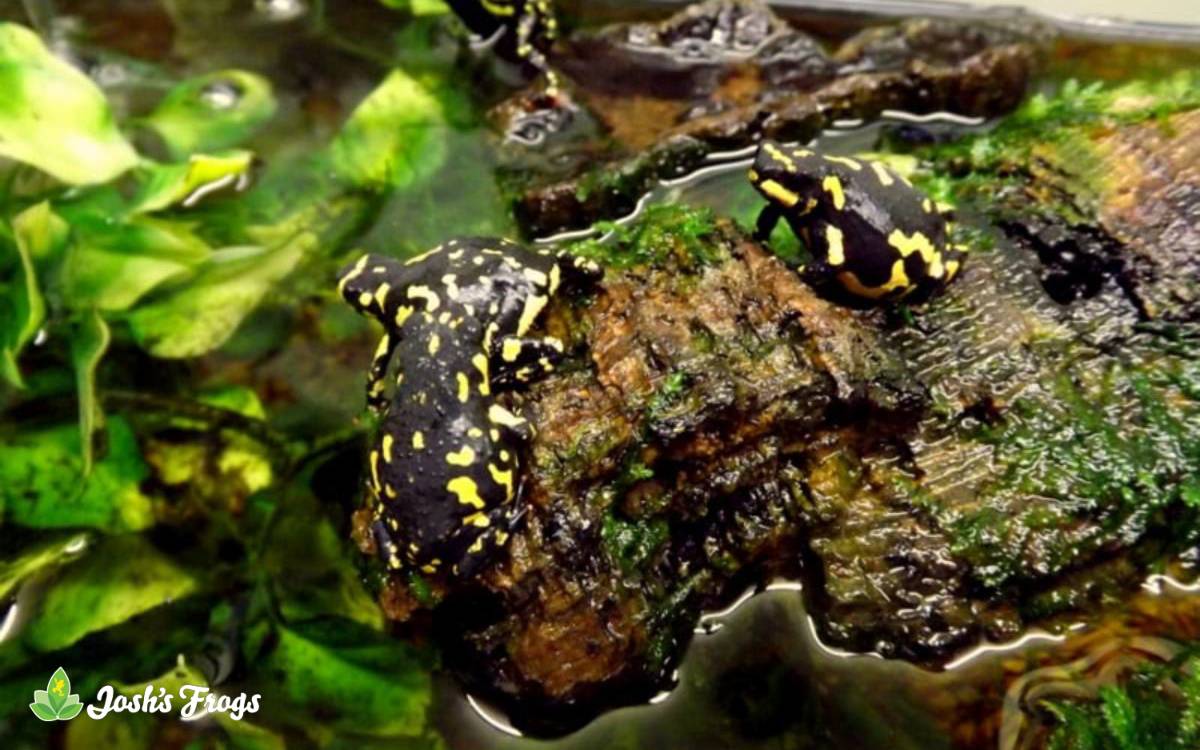
When possible, always choose captive bred animals as pets.
Captive-Bred vs. Wild-Caught Bumblebee Toads
Whenever possible, a responsible animal keeper should always pursue captive-bred animals. Not only is the collection of these animals not threatening wild populations, but captive-bred animals generally are already adapted to captivity. Additionally, captive-bred animals are much less likely to have problems associated with parasites and disease than their wild-caught counterparts.
Better yet, acquire animals directly from the breeder when possible. Not only will the animals be less stressed in the long run (the animals are going straight from the breeder to you, instead of going through several different sets of hands and being shipped multiple times), but doing so will provide you the opportunity of asking any questions you may have about your new pets. At Josh's Frogs, we strive to breed all of the animals we offer.
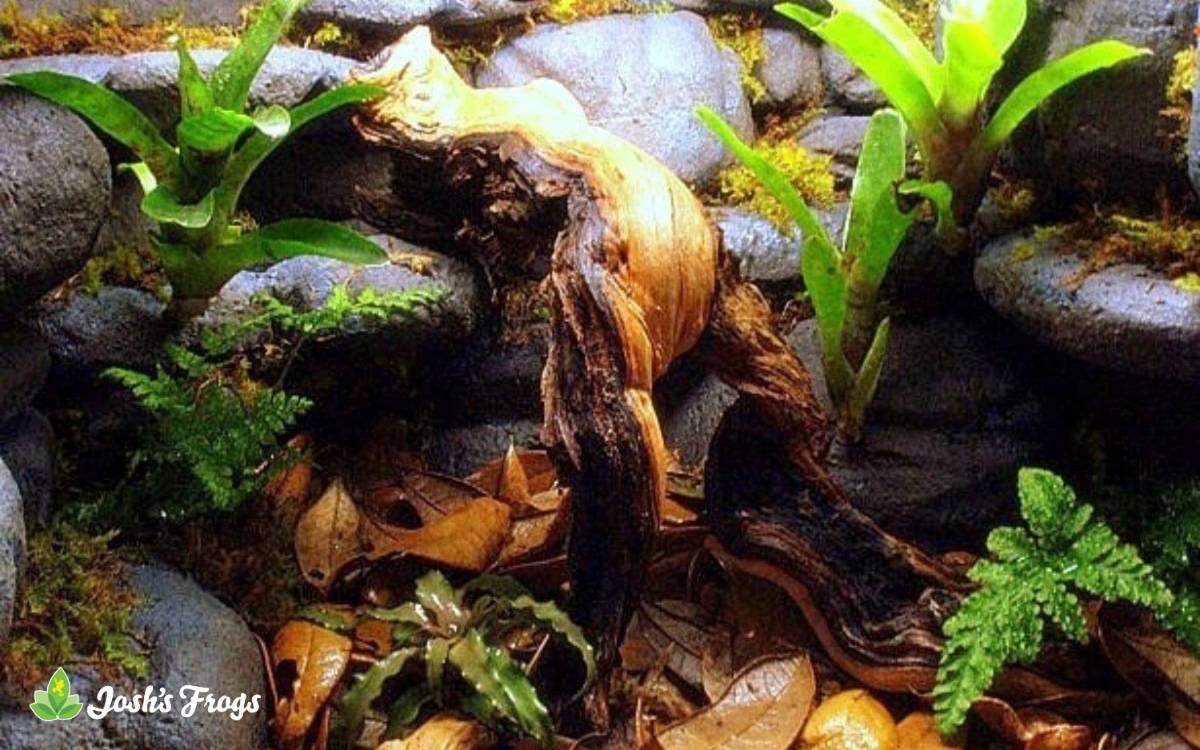
Bumblebee Toads do not require a naturalistic vivarium, but can do well in one.
Housing Your Pet Bumblebee Toads
Housing bumblebee toads can be very simple. These anurans do not require much space, as they really will not utilize it. Something the size of a large critter keeper can house 1-2 adults, while a 10 gallon could house 4-6 bumblebee toads. Bumblebee toads seem to be completely passive towards each other, and do great in groups. Ventilation is a must, as these toads will not tolerate high humidity for very long. A screen top will help provide this.
Substrate recommendations vary considerably, but ground coconut fiber works well for Josh's Frogs. Alternatively, you can set up a vivarium using Josh's Frogs naturalistic vivarium substrates, similar to keeping dart frogs. Provide items for your bumblebee toads to hide under, such as a cork bark flat or leaf litter. These toads will spend much of the time hiding under such objects. A shallow water bowl should be provided, as well. Bumblebee toads are not known for their climbing abilities, but they will appreciate a small bit of vivarium wood or live terrarium plants to climb on.
Lighting is for any live plants provided, and not required by bumblebee toads. There is no evidence that bumblebee toads benefit from UVB lighting, but a low level UV bulb, such as a 2.0 UVB bulb, may be beneficial.
Temperature and Humidity Requirements of Bumblebee Toads
Due to the environment from which they inhabit in Paraguay, bumblebee toads can tolerate a wide temperature and humidity range. The secret to keeping your bumblebee toads happy and healthy is to avoid the extremes. Bumblebee toads can tolerate temperatures from 40°F to over 90°F, but ideally are kept at about room temperature, in the low 70s.
In the wild, precipitation and humidity fluctuates widely based on season. Bumblebee toads can handle a wide range of humidity levels, but cannot tolerate humidity over 70% or so indefinitely–sadly, this has done many a bumblebee toad in. Aim for a humidity level of 50-60%. Routine spraying and a full screen top will aid in providing proper humidity levels.
It is important to check the temperature and humidity often, with use of a thermometer and/or hygrometer.
Feeding your Bumblebee Toads
Bumblebee toads are microphagus, meaning that they consume small food items. Reportedly, a large portion of the diet of a wild bumblebee toad is termites. Fortunately, bumblebee toads do quite well on other, more easily procured prey items in captivity.
At Josh's Frogs, we feed our adult bumblebee toads primarily hydei fruit flies, as well as springtails, isopods, extra small black soldier fly larvae, and 1/8 inch crickets. Young bumblebee toads start life feeding on baby springtails. At the size Josh's Frogs sells captive bred bumblebee toads, they are eating melanogaster fruit flies. All prey items should be dusted with a quality vitamin/mineral supplement. Josh's Frogs Toad Supplement Bundle is a great option.
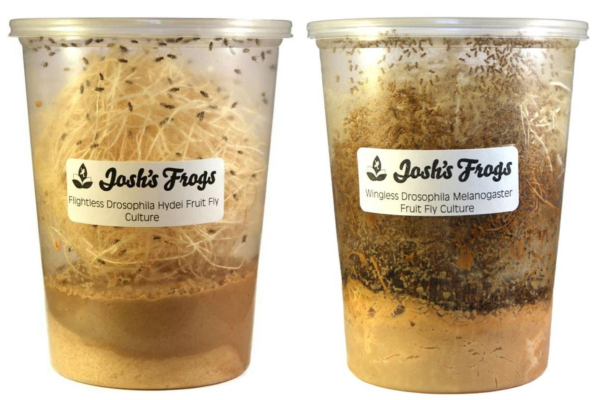
Bumblebee Toads do well on a diet of fruit flies. Younger toads will eat melanogaster, while older animals will eat hydei.
Captive Breeding of Bumblebee Toads
Captive breeding of bumblebee toads has been largely unsuccessful until recently. True, there have been several instances of bumblebee toads breeding, but it has largely resulted in very few offspring being produced. Most of the time, I think this was due to a small number of older animals being utilized in a breeding program, as breeding was not attempted much until after the toads ceased being imported, and adult bumblebee toads were difficult to find.
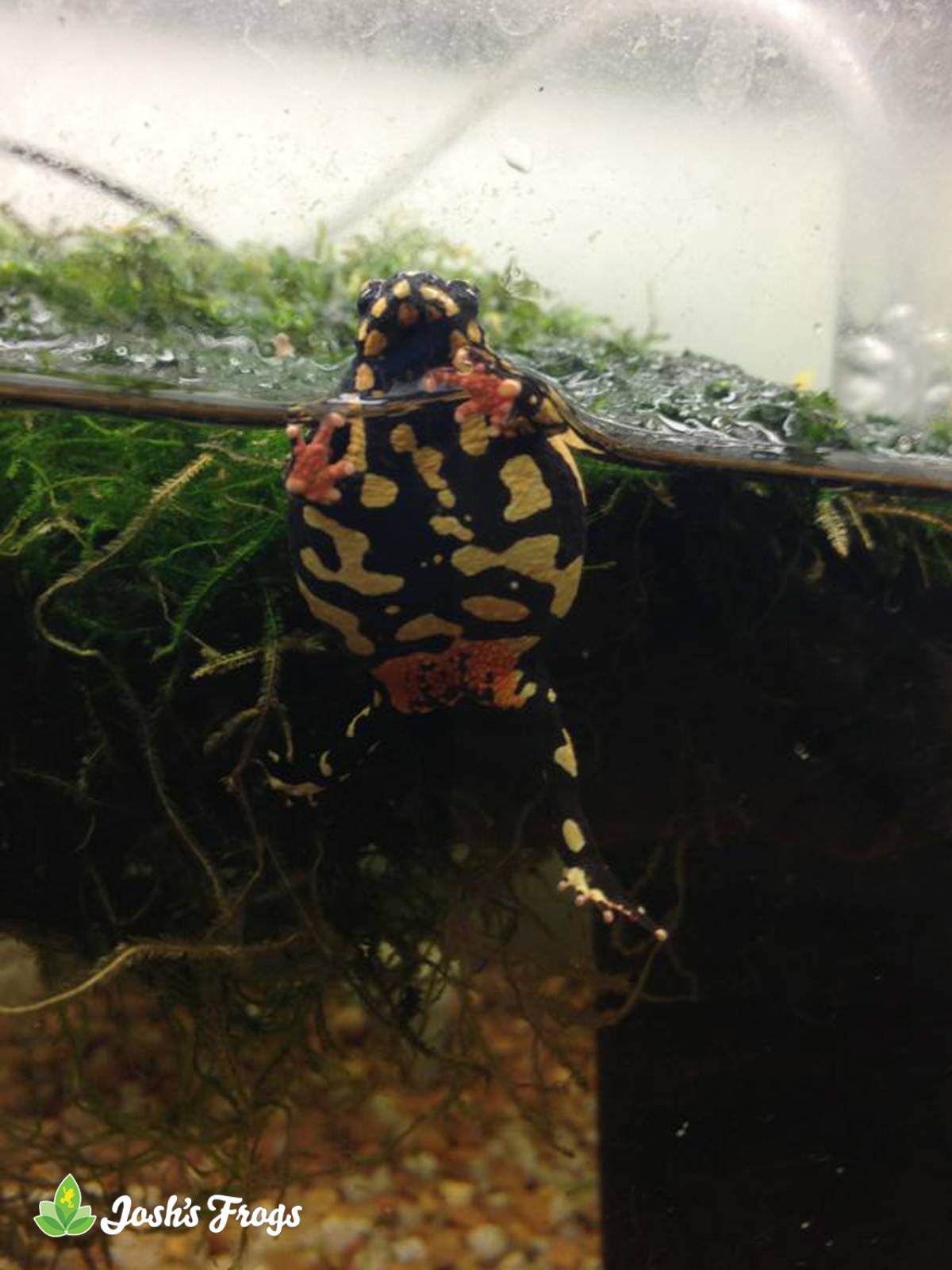
Unfortunately, many wild-caught bumblebee toads were sold as captive-bred animals the last time they came in. There is an easy way to tell if a bumblebee toad is captive-bred or wild-caught. All wild-caught bumblebee toads will have red blotches on their rear and the bottoms of their feet. In captive-bred animals, these red blotches are yellow. This is most likely due to their diet as tadpoles, and is something we at Josh's Frogs are attempting to address via supplementation of carotenoids in the tadpole's diet.
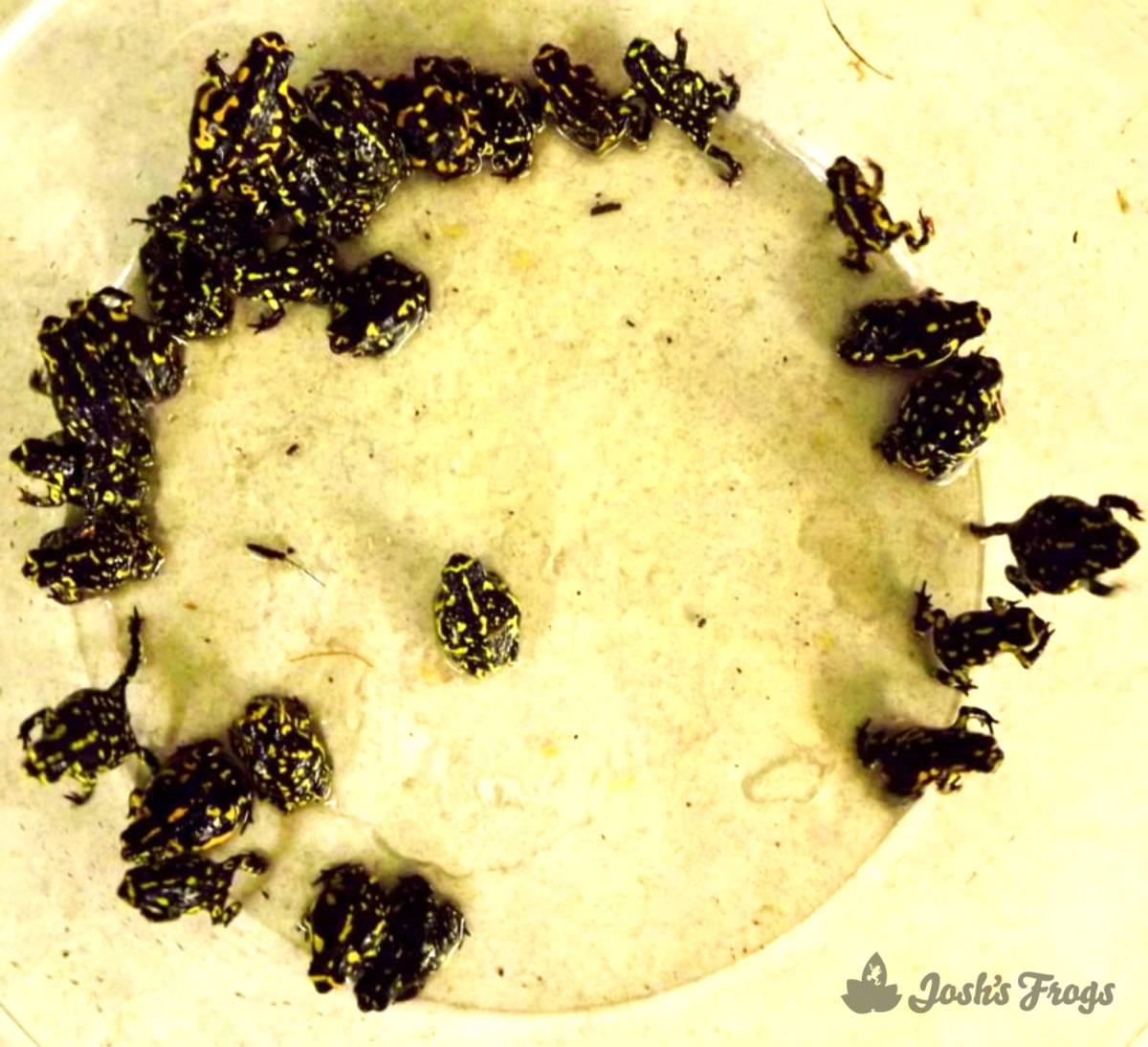
Adult bumblebee toads getting ready to go into the rain chamber.
Sexing Adult Bumblebee Toads
Sexing adult bumblebee toads is quite easy. Once the toads are about 10-12 months old, they display obvious sexual dimorphism. Females are about 1.5-2 times larger than males, and much more rotund. Males are smaller, more slender, and typically call when kept in a wet or more humid environment. A bumblebee toad's call resembles that of a canary, and is very melodious.
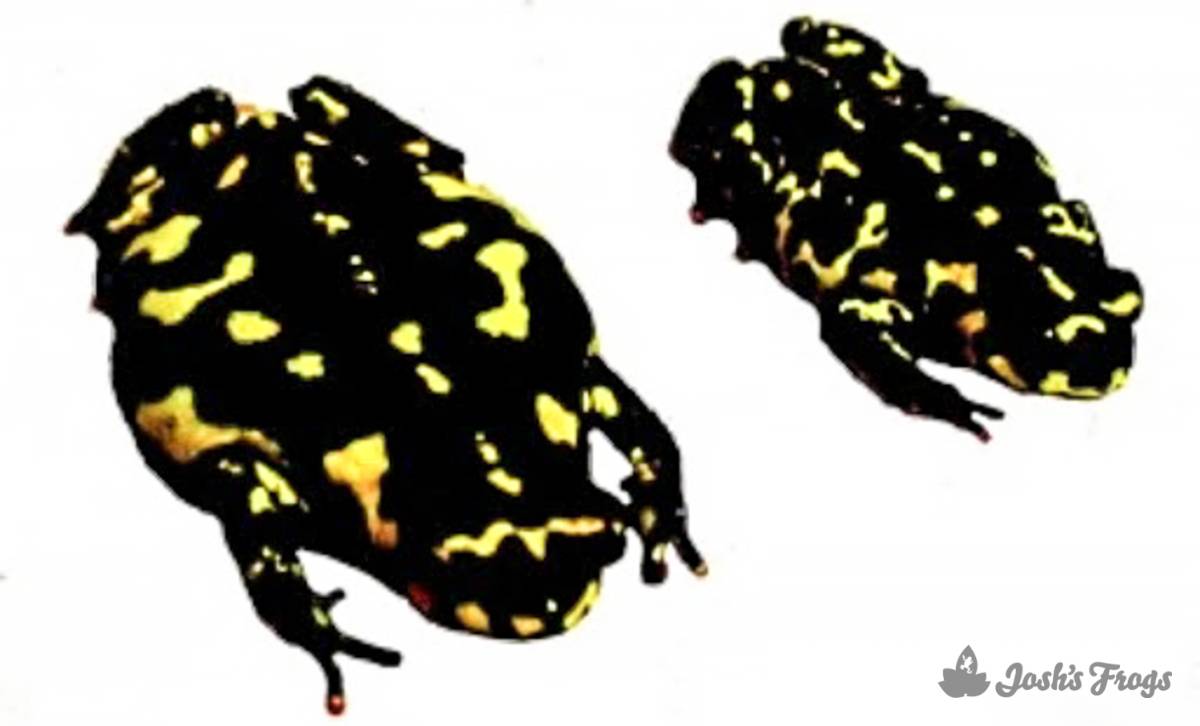
Adult Bumblebee Toads - female on left, male on right.
Cycling Bumblebee Toads
Cycling refers to mimicking the seasonal temperature and humidity differences an animal or plant is exposed to in the wild. Often, this is necessary for the organism to reproduce in captivity. While cycling bumblebee toads is not absolutely necessary to breed them in captivity, cycling them definitely increases the chances of successful egg laying.
To cycle bumblebee toads, we cut feeding in half for a couple weeks, then drop the temperature down to about 55°F-60°F as well as stopping all misting. As long as the toads have access to water in a shallow dish, they will be fine. After 2-3 weeks of this, we start misting again, double or triple feeding, and keep the toads at normal room temperature (about 70-75°F). After a week or two, any mature females will quickly bloat with eggs. Gravid females will look like they are about to pop! At this point, all of the bumblebee toads that were cycled are put in a rain chamber.
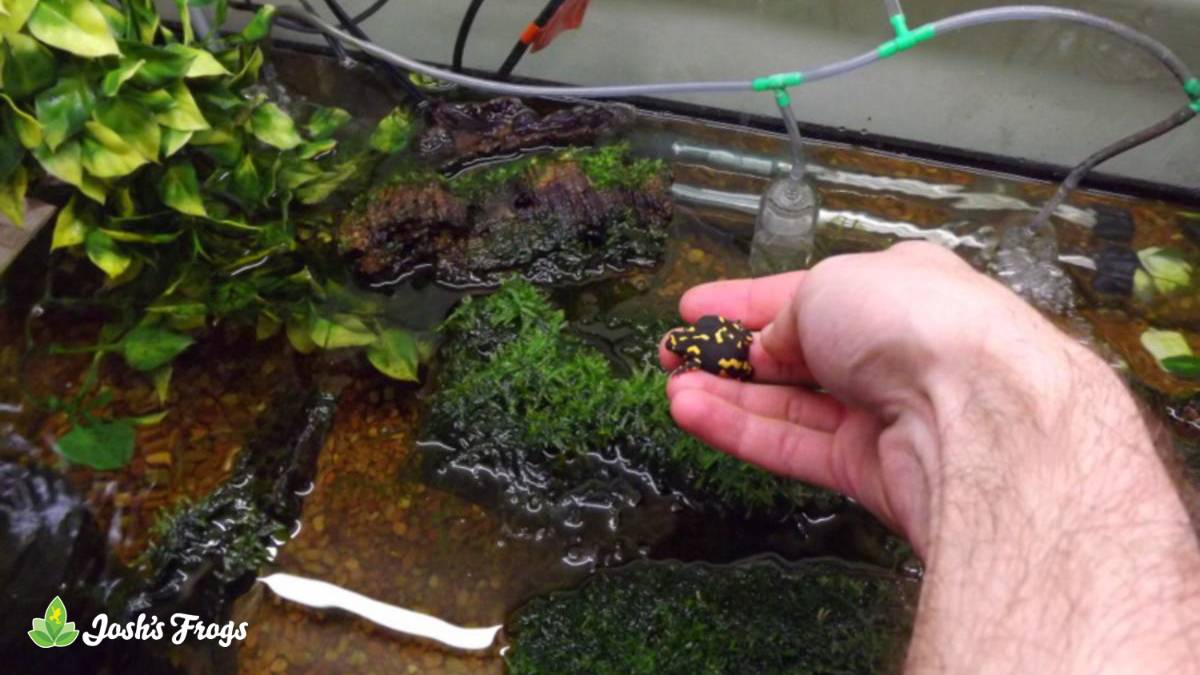
Adult female bumblebee toad being introduced into a rain chamber.
Using a Rain Chamber with your Bumblebee Toads
Rain chambers allow us to mimic the heavy seasonal rains that tell many amphibians in the wild it's time to breed. For bumblebee toads, which breed primarily in vernal ponds, we use a 40 gallon breeder tank measuring 36x18x16 inches. About 2 inches of gravel is placed in the bottom of the tank. Several sponge filters, run off of an aquarium air pump, are used to keep the water oxygenated and maintain healthy levels of beneficial bacteria. A submersible aquarium heater is used to keep the water at about 74°F.
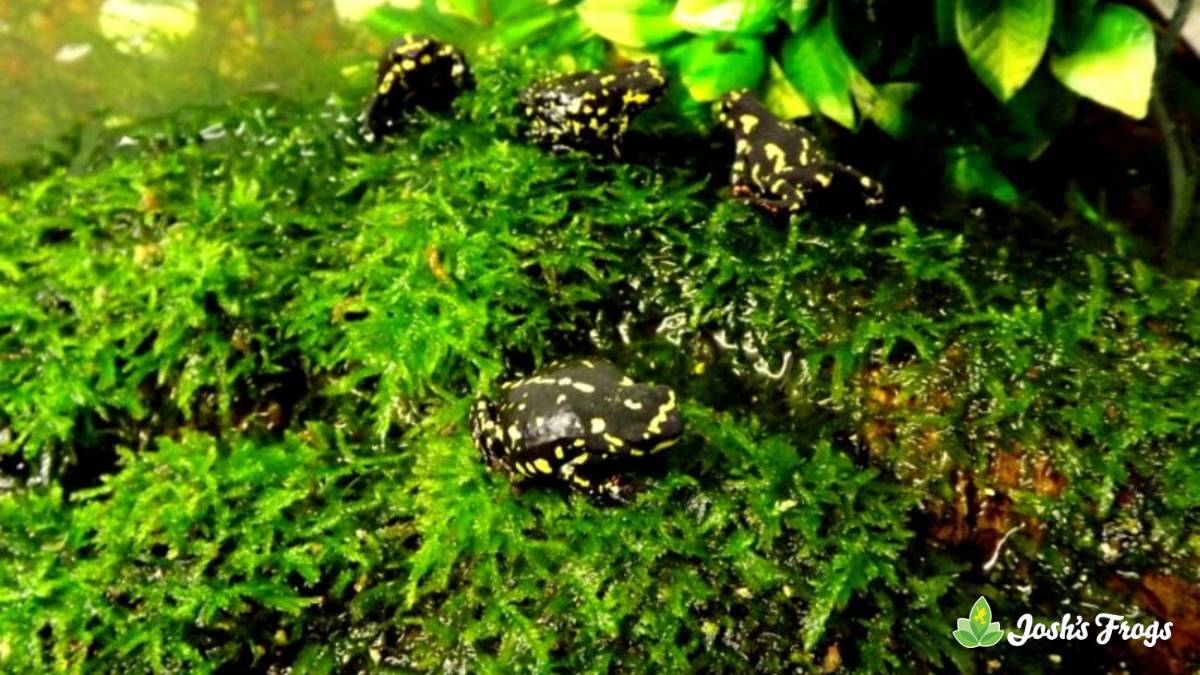
Adult bumblebee toads hanging out on java moss covered cork pieces in a rain chamber.
Floating cork bark pieces, covered with java moss, are used to provide the adult bumblebee toads a place to hang out in the rain chamber. Plastic plants attached to the glass with a suction cu, can be placed in the corners of the rain chamber to provide a place for the bumblebee toads to climb out, and to help prevent drowning. Bumblebee toads are clumsy, and can easily drown if not provided with an easy way out of the water.
Water is maintained at a depth of about 10 inches, with a pH of about 6.5, and is a mix of R/O water, tadpole tea (peat extract), and enough Instant Ocean Salt Mix (for saltwater aquariums) to acquire a specific gravity of 1.001.
Josh's Frogs strongly recommends setting up the rain chamber several weeks before introducing your cycled bumblebee toads, as this will give plenty of time for beneficial bacteria to grow.
Bumblebee Toad Egg Care
If properly-cycled bumblebee toads are placed in the rain chamber, expect calling almost immediately, and amplexus within the first 24 hours. If all goes well, within 1-3 days, long strands of gray colored eggs should be found hanging off of the java moss and plastic plants a few inches below the surface. Any eggs found that are not attached to plants should be quickly removed, as these eggs will typically go bad and grow a fungus, which can quickly cause healthy eggs to spoil. Eggs will develop a small ridge within 12 hours if fertile, and resemble tadpoles within 2 days. Eggs can hatch in 3-5 days, depending on temperatures.
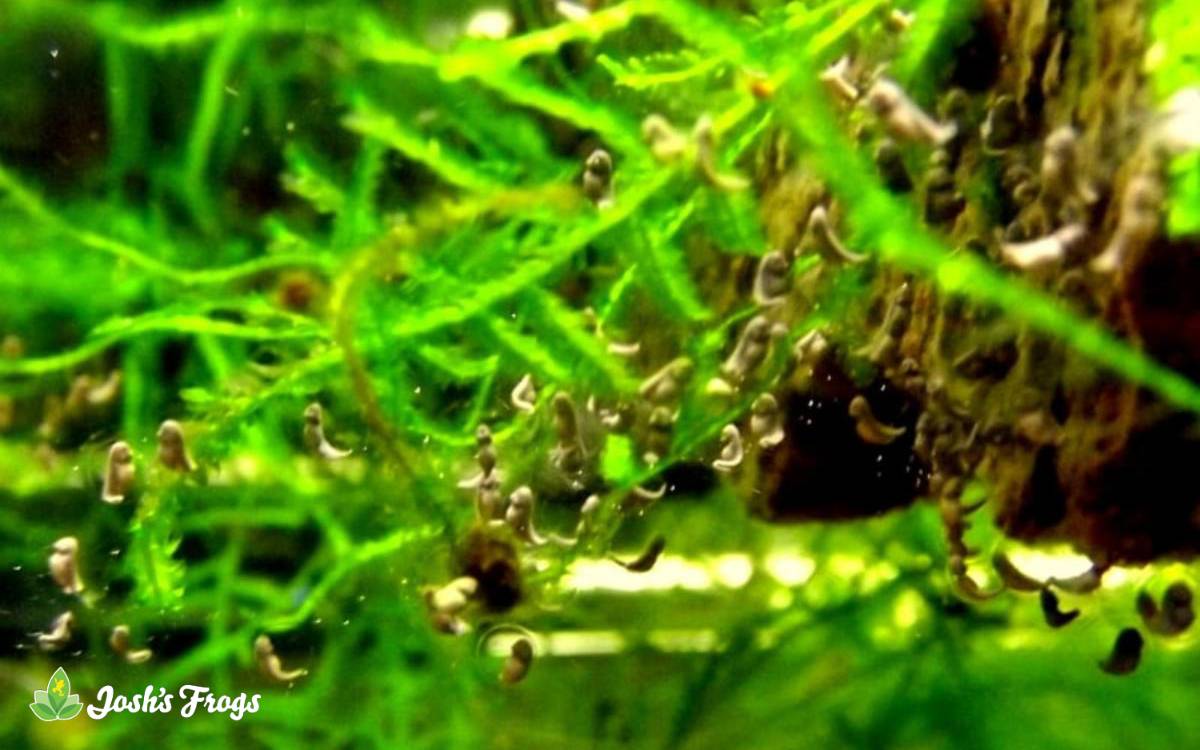
Bumblebee Toad eggs, after 24-36 hours of development.
Bumblebee Toad Tadpole Care
Once the eggs hatch, the tadpoles (very small, approximately 3-4mm) will drop to the gravel and remain stationary for a few days. During this time, while they absorb the rest of their yolk. After they begin to swim around, it's time to start feeding. Also, it's time to begin performing regular water changes. At Josh's Frogs, we feed the tadpoles Repashy Savory Stew. Small portions are made up and poured into half of a petri dish, where the gel is allowed to set, then placed in the fridge.
Every day, an entire petri dish of food is placed in the rain chamber. A partial water change (about 50%) is performed daily to keep water quality as pristine as possible. After 5-6 weeks, the tadpoles will develop back legs, followed by front legs 5-7 days later. At this point, the toadlets, typically solid black and about the size of a fruit fly, will climb on the cork pieces.
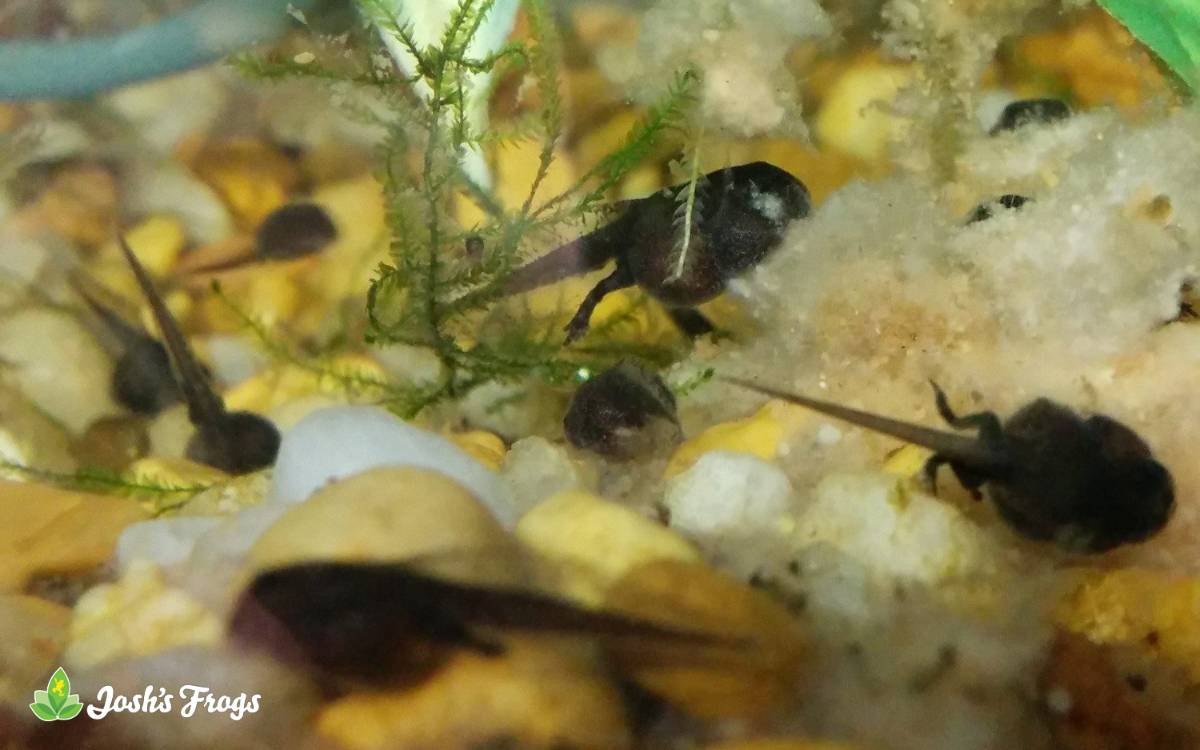
Bumblebee toad tadpoles, some sprouting legs!
Caring for Young Bumblebee Toads
After the toadlets have emerged from the water, it's time to remove them from the rain chamber and place them in rearing containers. At Josh's Frogs, we use Sterilite bins that measure approximately 24x15x6 inches. A sheet of glass provides a sealed top. This is especially useful to maintain the high humidity newly-morphed bumblebee toads require to thrive. A shallow layer of moist ground coconut fiber is used as a substrate, with a few handfuls of sphagnum moss is provided for the bumblebee toads to take shelter in, as well as a few plant clippings.
Young bumblebee toads are fed springtails daily that have been dusted with a vitamin/mineral supplement. Dusting springtails can be tricky – we use a straw to blow springtails out of their culture into a larger bin, then into a 32 oz. cup, where they are dusted with Repashy Calcium Plus, which is finer than many other supplements available and seems to stick better to the springtails.

Captive-bred bumblebee toad, at one month of age.
Bumblebee toadlets grow quickly, and eat more than you would believe. The most common way to fail with the toadlets is to not feed enough. After 8-10 weeks of eating springtails, most bumblebee toads will be able to eat melanogaster fruit flies. At this point, the young bumblebee toads are ready for their new home.
At this point, we house the bumblebee toads on coconut fiber that is just dry enough to not stick together when squeezed. Provide a small pile of damp sphagnum moss as a humid hide. A smaller plastic vented enclosure works well, misting once in the evening. The humidity is maintained at 60-65%, and the room temperature is in the mid 70s.
Conclusion
With recent breakthroughs in captive breeding of bumblebee toads, their future looks bright in the hobby. At Josh's Frogs, we'll continue to produce healthy, captive-bred bumblebee toads in the hope of fulfilling the demand for this wonderful little gem. Hopefully we'll someday be able to eliminate the demand for wild caught bumblebee toads.
At the time this blog was written, not many people were working with bumblebee toads. Consider adding some to your collection, and even breeding them. They've nearly disappeared from the pet trade in the past! It's up to all of us as responsible pet keepers to make sure that doesn't happen again.
Want to make caring for your bumblebee toads easy? Check out our Josh's Frogs Bumblebee Toad Care Kits!
Additional Reading:
- AmphibianCare.com – another good, basic care sheet on bumblebee toads by Chris Dodson.
- Dendroboard.com – a good read about bumblebee toads, posted on the largest internet frog forum.
- Wikipedia – an article on the genus Melanophryniscus, which bumblebee toads are a member of.
- American Museum of Natural History – good taxonomic and natural history information about bumblebee toads