

Josh's Frogs
Why you should buy from us
Chytrid 101: Causes, Treatments, and Prevention
Last update: April 6, 2026
Chytrid, short for chytridiomycosis, is an infectious fungal disease affecting the skin of amphibians, particularly frogs, toads, and salamanders, caused by the fungal pathogens Batrachochytrium dendrobatidis (Bd) and Batrachochytrium salamandrivorans (Bsal). Technically, ‘chytrid’ is the name of the disease, but it's often used as shorthand for the pathogens that cause it, as it will be here.
One of the most devastating infectious diseases known to science, chytrid has become a worldwide pandemic and a major driver of the amphibian extinction crisis, a mass extinction event playing out in real time.
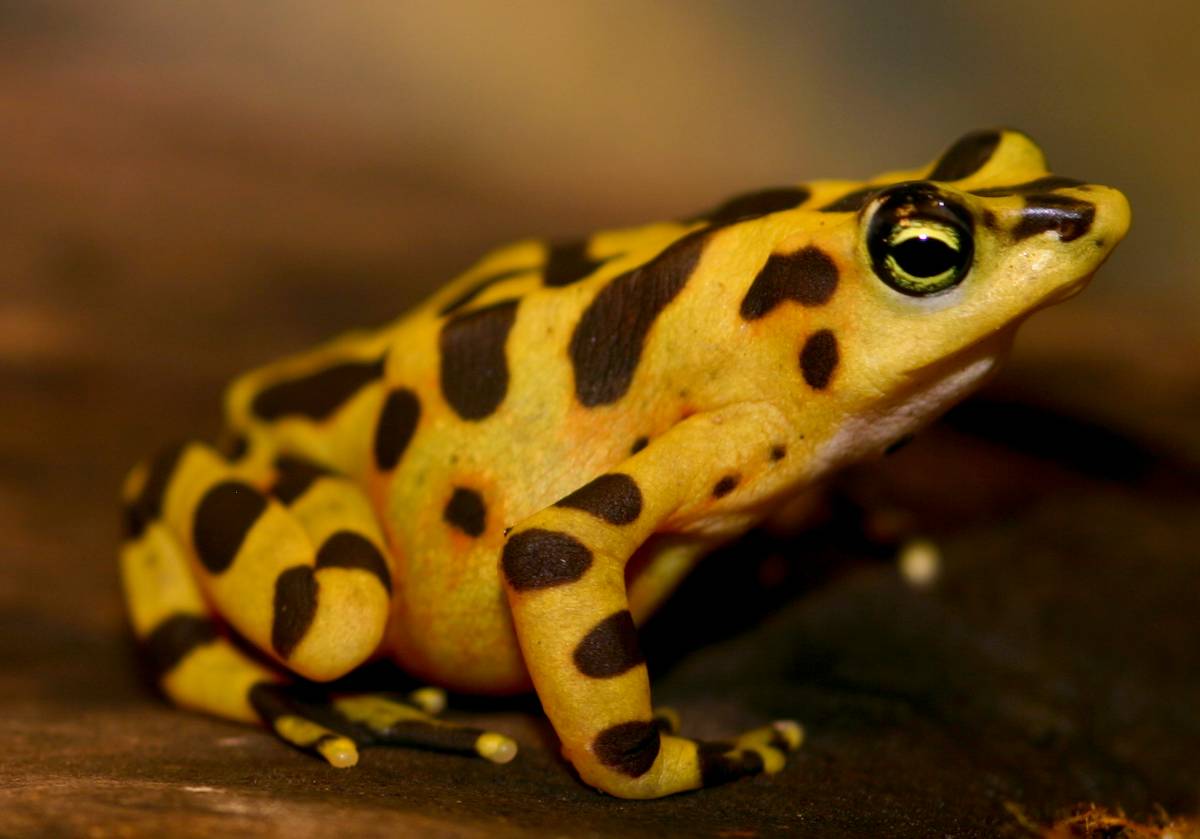
Once abundant, the iconic Panamanian Golden Frog was devastated by chytrid. It's now thought to be extinct in the wild, but re-introduction and recovery efforts continue. "Panamanian Golden Frog (Atelopus zeteki)" by brian.gratwicke is licensed under CC BY 2.0.
"Bd has been linked to the extinction of around 90 plus species. It's been linked to the decline of over 500 species globally." So says Dr. Matt Gray, a leading disease ecologist with the University of Tennessee who's studied amphibian diseases for over 20 years. He's also the director and CEO of the Healthy Trade Institute (HTI), a nonprofit organization that works to reduce the spread of diseases like chytrid and ranavirus through amphibian trade networks. The modern concept of a healthy pet trade, which HTI works to implement through legislation, education, and a certification program, was inspired in part by chytrid’s unprecedented spread and resulting devastation of the world’s amphibians. Chytrid’s history, impact, and legacy will be explored more in another blog. The focus here will be chytrid basics, which all amphibian hobbyists should know.
"Bd has been linked to the extinction of around 90 plus species. It's been linked to the decline of over 500 species globally."
Before diving in, it's important to also clarify some key differences between Bd and Bsal, the two fungal pathogens known to cause chytrid. Though closely related, their natural histories, pathologies, and effects on amphibians differ significantly. Bd was formally described in 1999 and has since been researched more extensively than Bsal, which wasn’t discovered until 2013. Unlike Bd, which is now widely distributed on every continent where amphibians occur naturally, Bsal has not yet spread to North America. Bsal primarily affects salamanders, and North America is home to much of the world's salamander biodiversity. Consequently, preventing its spread to our shores is a major focus of modern amphibian conservation, and a subject of active research for disease ecologists like Dr. Gray. However, the focus of this blog will be Bd specifically, and the specific form of chytrid that Bd causes.
What is Chytrid?
Chytrid is a skin disease caused by a waterborne fungal parasite adapted to living in and around amphibian hosts.
“People can think of chytrid being like leprosy for humans,” notes Dr. Gray. “It attacks the skin. It destroys the skin. The only thing that’s actually worse about chytrid is that an amphibian’s skin is a major organ of survival.”
Chytrid feeds on keratin, a protein found in amphibian skin. Keratin is not unique to amphibians, but amphibians are unique among animals in the function of their permeable skin, on which they depend not only for protection from the elements but also to breathe, rehydrate, and osmoregulate. As chytrid infects and colonizes the keratin-rich layers of amphibian skin, it can seriously disrupt these vital functions. In an attempt to expel the infection, the affected layers may grow and shed faster. The affected layers may even grow excessively thick, a condition known as hyperkeratosis.
“Our eyes can’t see it. We’re talking microns,” notes Dr. Gray, “but what we’re talking about is increasing that thickness by ten, twenty, thirty times. That is enough to affect osmoregulation.” Thicker skin is less permeable; if it can no longer absorb oxygen, water, and electrolytes effectively, the amphibian host will die.
How does Chytrid spread?
Chytrid fungi have two main life stages: zoospores and zoosporangia. A zoospore is a mobile microorganism shaped like a tadpole, with a round body and fin-like tail (flagellum) that it uses to swim. Zoospores are fully aquatic. They spread through water in search of hosts, to which they attach and develop into Zoosporangia. A zoosporangium is an immobile cell mass that grows in the host's skin and functions as a zoospore factory, feeding on the host to produce more zoospores. In short, zoosporangia cause chytrid and zoospores spread it.
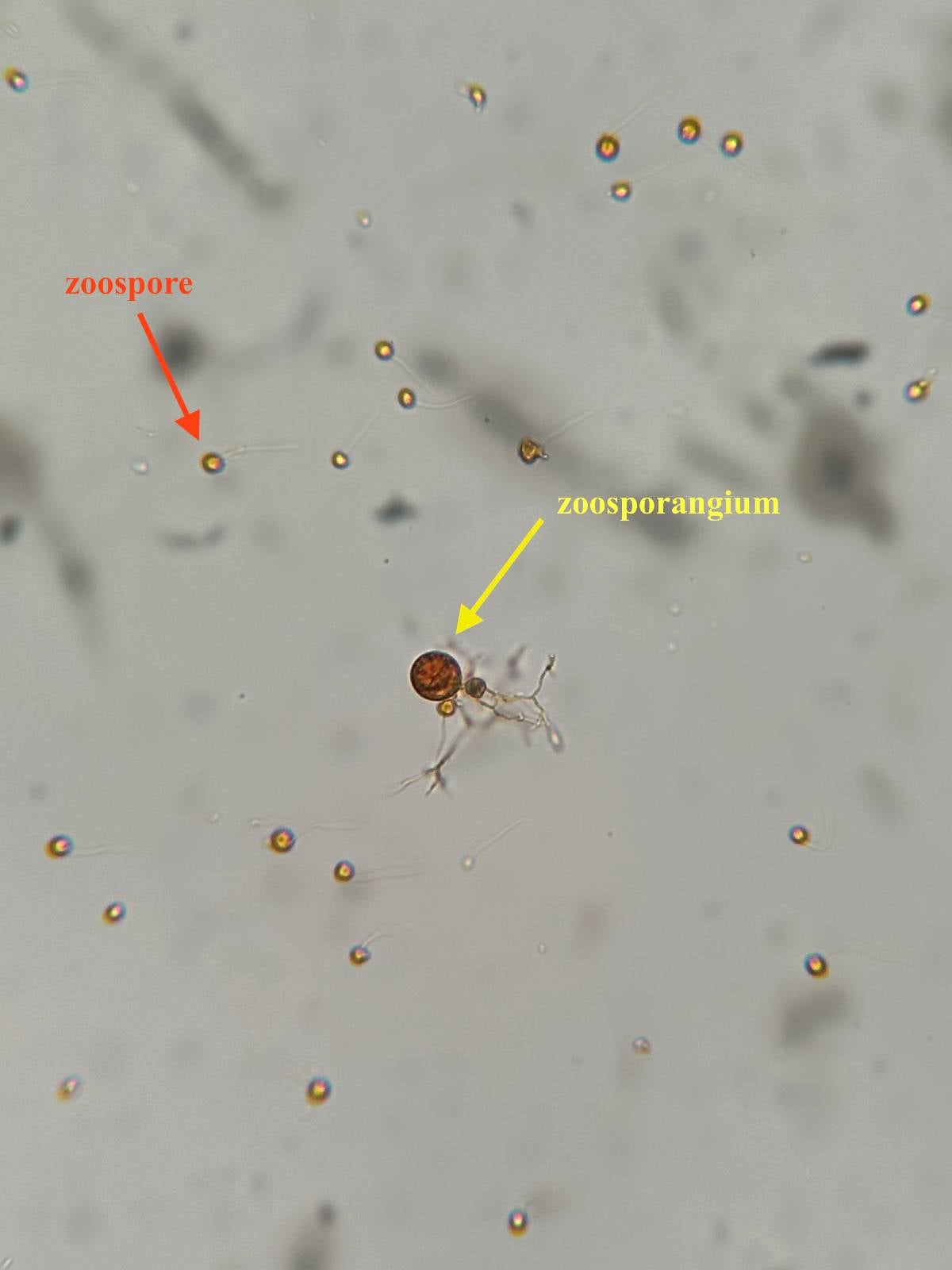
Chytrid under the microscope. Photo and labels by Gracie Hedgpeth.
Chytrid spreads from frog to frog by physical contact with zoospores, either directly from one frog to another, or indirectly through their shared environment. Infected frogs may deposit zoospores on whatever they touch. If uninfected frogs touch those same things, they may become infected. Zoospores need some amount of water, however miniscule, to survive. While they can move freely within water, their range is limited to the extent of their watery environment. They cannot traverse land on their own, so they rely on bigger, more mobile creatures to spread from one body of water to another. In the wild, many animals can transport chytrid, including frogs, bugs, waterfowl, and humans. In captive environments, keepers performing routine care tasks without following proper biosecurity protocols can unknowingly spread chytrid from one tank to another, as can fruit flies and certain pest bugs that move freely among tanks.
It’s important to note that not all amphibians infected with chytrid die. If that were so, it may never have become a worldwide pandemic, yet resistance to the disease varies greatly from one species, population, and individual frog to another. Species such as the American bullfrog and the African clawed frog, which have long been traded internationally for use as food, pets, medicine, and even test subjects, can harbor chytrid with limited ill effects. When taken from their native range and exposed to new amphibian populations, these silent carriers can and likely have contributed to chytrid’s worldwide spread.
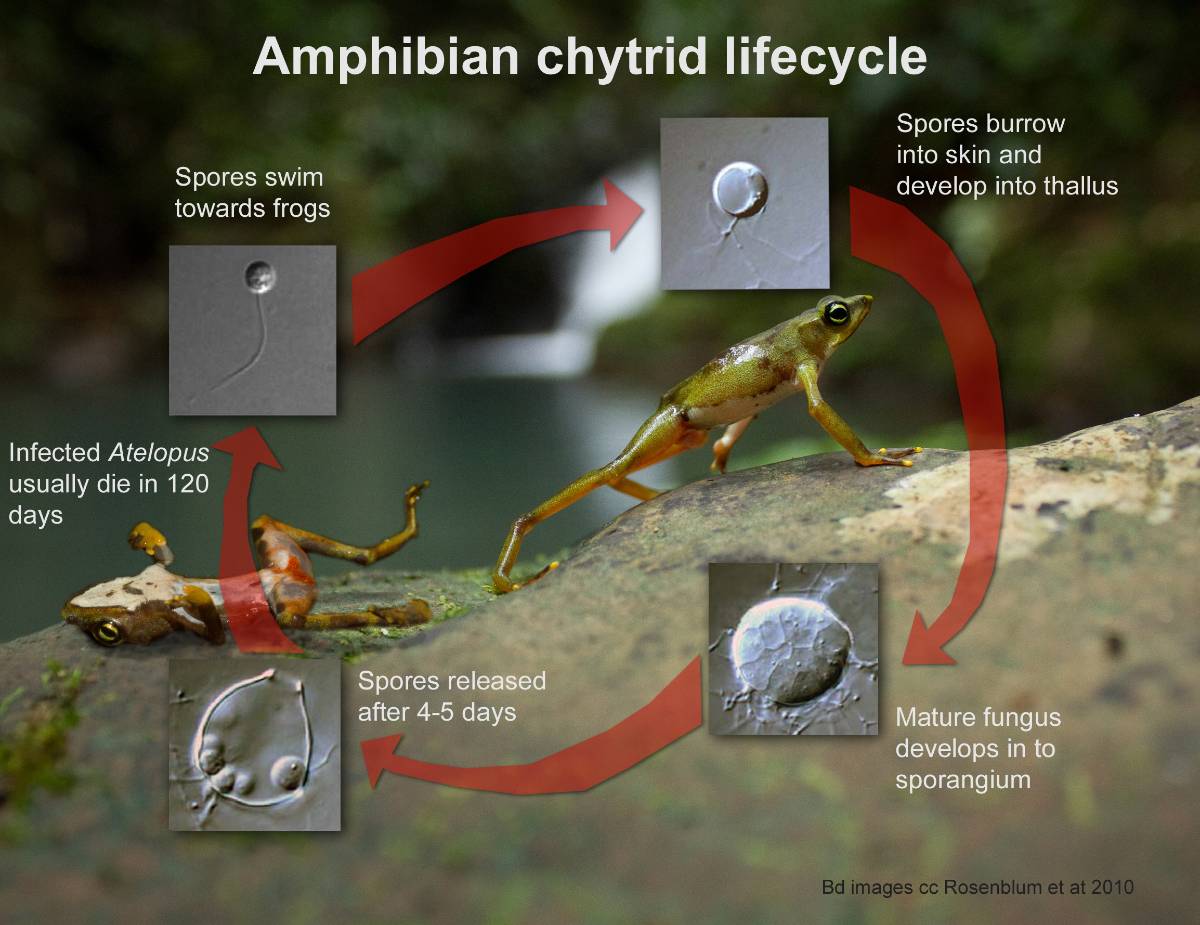
"Amphibian chytrid lifecycle. Batrachochytrium dendrobatidis. Panama." by brian.gratwicke is licensed under CC BY 2.0.
Chytrid signs and symptoms
The first visible signs of chytrid infection may be unusual behaviors such as lethargy, lack of appetite, and general unresponsiveness.
By weight, both humans and frogs are mostly water, and we both control our muscles with electrical signals carried through our watery bodies by electrolytes. After a hard workout, we humans might gulp down a sports drink to replenish both water and electrolytes, but not frogs. They can't drink with their mouths, so they must instead replenish these vital resources through their permeable skin. Chytrid can interfere with this process, leading to dehydration and impaired muscle function.
As the disease progresses, hyperkeratosis may also affect a frog’s normal shedding process in several ways. A healthy frog typically sheds its outermost layer of skin every two to seven days. A healthy shed typically comes off cleanly in one piece, which the frog promptly eats. Because the normal shedding process is relatively quick, infrequent, often occurs at night, and leaves no trace, you may only notice it when something is wrong. Chytrid-infected frogs may begin to shed more frequently, have difficulty shedding, and show signs of abnormal or incomplete sheds. Shed fragments and chunks of sloughed skin may appear in the enclosure more frequently. Some of these fragments may be bloody. In severe cases the skin may even slough off faster than it can regrow, leaving the frog with visible lesions and open wounds.
Keep in mind that many of chytrid’s visible symptoms tend to show up very late in the disease’s progression. As Dr. Gray explains, “it usually takes about two to four weeks [after infection] before you really start to see a lot of signs, and a lot of those signs are not even seen, like a lot of the sloughing and all that. You don’t even see them until the animal is really really sick.” By then the animal has been infectious for weeks, much of the worst damage is already done, and it’s likely too late to intervene.
How to monitor for chytrid and other diseases
The best approach to chytrid detection is a combination of careful observation and routine testing.
Observation alone is not enough to detect and address chytrid effectively. Not only do symptoms tend to present late in the disease’s progression, they may never present at all. It’s possible for frogs to both catch and spread Bd without ever getting sick. Furthermore, many of chytrid’s characteristic symptoms can also be caused by ranavirus and other diseases, each with vastly different consequences and treatment options. While chytrid is treatable, effective treatment depends on early detection. Treatment is stressful even for healthy frogs. By the time a frog becomes visibly sick, it may already be too weak to overcome the disease.
At Josh’s Frogs, we experienced chytrid’s insidious nature first-hand in late 2024, when randomized routine testing revealed the disease to have escaped quarantine and entered our general population of 12,000 amphibians. What followed was a months-long battle to test, treat, and clear thousands of frogs, yet throughout the process only about 40 amphibians, or 0.3%, ever developed chytrid-like symptoms. In many cases, those symptoms were triggered by the stress of treatment itself. Without testing, we simply wouldn’t have discovered the disease in time to save our frogs.

Swabbing a frog to test for pathogens
Because the easiest way for chytrid and other pathogens to enter your herp collection is through new animals, it is important to quarantine all new animals. Before letting new amphibians interact with others, it is good practice that they test negative for chytrid and ranavirus. For businesses that acquire hundreds or thousands of animals in a shipment, the Healthy Trade Institute can provide guidance on how many should be tested using the power of statistics. If there is a positive detection, they can also provide guidance on how to treat animals. Businesses and hobbyists who become certified members of the Healthy Trade Institute can use their certification to let others know the amphibians they sell have low likelihood of being infected by chytrid or ranavirus. The Healthy Trade Institute also certifies businesses for reptile pathogens of concern, like Cryptosporidium in snakes. The Healthy Trade Institute recommends that at least 20% of breeding or sales animals are tested twice per year.
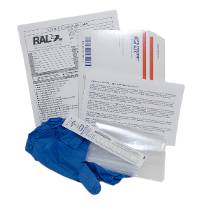
Chytrid testing is typically performed with the PCR method (polymerase chain reaction), which is also used for Covid testing. PCR is a laboratory method that can identify trace amounts of target DNA. Thanks in part to the Covid pandemic, PCR testing has become more efficient, convenient, and affordable than ever before. We offer an Amphibian Chytrid and Ranavirus Testing Kit with everything you need to send up to two samples for testing, and we show you how to use it in this video. Be aware that false positives can occur with any testing method, so it’s best to confirm any positive result with a second test before proceeding to treatment.
Healthy Trade Institute has a wealth of chytrid testing information and resources, including instructional articles, how-to videos, and a list of approved diagnostic laboratories.
How to treat chytrid
Despite its deadly reputation, chytrid is both treatable and curable. If you confirm a chytrid infection, the first thing to do is isolate and disinfect: isolate the infected animal, and disinfect everything involved in its care. Move the infected animals into a separate quarantine enclosure, ideally in a different room. Using a 5% bleach solution, thoroughly disinfect all tools and surfaces involved in animal care. Thoroughly rinse all disinfected materials with clean water and allow to dry completely before using them again.
To disinfect a tank or vivarium, start by removing all its contents. Using a 5% bleach solution, clean the tank inside and out, and fully submerge all durable decor items like water bowls, food dishes, and fake plants in the solution for 10 minutes. Rinse everything thoroughly with fresh water and allow to dry completely. All live plants and substrates should be discarded and replaced. If you’d rather not replace the substrate, you can bake it instead. Bake for however long it takes to reach an even 300° F (149° C). Use a meat thermometer to verify that the centermost material has reached target temperature, just as you would when cooking meat.
There are two established methods for treating chytrid-infected amphibians: heat and antifungal medication. At Josh’s Frogs, we have extensive experience with both. Unfortunately, there is no single treatment method that works for every species and situation. Heat treatment, which has the two-fold benefit of treating infected frogs and disinfecting their enclosure at the same time, is the preferred method for large-scale operations like ours, but not all species can tolerate the required temperatures, and it may be impractical for many hobbyists. Antifungal treatments can also be effective, but they pose toxicity risks for some frogs. Most widely-available antifungals were developed for use with humans and large mammals. At present, there are few, if any, amphibian-specific medications available.
Because every pet and situation is different, we strongly recommend consulting a licensed exotic animal veterinarian before attempting treatment. The Association of Reptile and Amphibian Veterinarians (ARAV) has a database of veterinarians that specialize in amphibian and reptile diseases.
Treating with heat
Before attempting heat treatment, you must first verify that the animal to be treated can tolerate the temperature required to kill chytrid. Every species has a maximum temperature at which they can function, called the critical thermal maximum, or CTmax. For most commonly-kept species, a quick internet search will get you this number. The animal to be treated must have a CTmax of 86°F (30°C) or higher.
The basic heat treatment process is straightforward, if not easy or quick. A consistent temperature of 86° F (30°C) for 10 days will effectively kill chytrid. Higher temperatures will kill it in less time, but will likely kill the host as well; 86° F is the lowest temperature known to kill the fungus alone. To minimize stress on the animals being treated, it’s important to properly acclimate them by increasing and decreasing the temperature gradually, no more than 3.6°F (2°C) per day. For a room with an ambient temperature of 72°F, that’s about 4 days to reach treatment temperature and 4 days to return to room temperature afterward, for a total treatment period of 18 days. For best results, maintain treatment temperature consistently throughout the treatment period. Any dip below 86°F during the critical 10-day timeframe may jeopardize the treatment process. For large operations, it may be beneficial to invest in temperature-controlled environmental chambers for a more efficient treatment process.
Treating with antifungal medication
Itraconazole is a common antifungal medication that’s available in a variety of preparations and formulas, though in most cases a prescription is required. Itraconazole was not originally intended for use with amphibians, but its effectiveness at clearing chytrid infection is now well documented. In our experience, liquid preparations of Itraconazole are easier to work with than tablets and powders. To treat, simply soak the infected frogs in a water bath containing 0.0025% Itraconazole for 5 minutes per day for 5 days.
Other treatment options
Chytrid treatment is an area of active research for amphibian-focused disease ecologists, including Dr. Gray. “One area that we’re looking into right now,” Gray explains, “is plant-derived fungicides.” And you might even have one in your cupboard already: turmeric.
Gray’s recent research focuses on a component of turmeric called curcumin, which is naturally antifungal. “We’ve learned that curcumin can kill both Bd and Bsal in water. We’ve actually exposed animals to Bsal and then treated them with a curcumin bath. And it’s been effective at reducing their likelihood of dying and actually reducing the infection loads.” The next step is to explore its effects on Bd, and Gray is currently working on funding to do just that. If successful, his findings may lead to a new chytrid treatment that’s safer and cheaper than anything currently available.
How to stop chytrid's spread & protect amphibians
Every responsible hobbyist should be concerned with protecting amphibians, whether they’re ours or not. The health and safety of your animals can affect animals far beyond your doorstep, and the reverse is also true. One of the greatest lessons that our hobby can teach is that our actions are all interconnected, not just as keepers of animals, but in a greater sense as the keepers of our shared planet.
“What we call a pathogen,” Dr. Gray explains, “when it gets out of the captive trade, and it gets into the wild, it's called spillover. And what we want to try to do is reduce that chance, that likelihood of spillover from pets to wild populations.” As hobbyists, we can all take a few simple, practical steps to reduce that chance.
When working with your own frogs, practice basic biosecurity. This doesn’t mean turning your house into an exclusion zone or donning a hazmat suit to do animal care. It does mean being mindful of the chance, however slim, that your pet might be sick, and acting accordingly. When working in a tank or handling an animal, wear disposable gloves, and change them before moving to a different tank or animal. Keep a separate set of tools to clean and maintain each of your tanks. If that’s not an option, disinfect your tools before using them in the next tank.
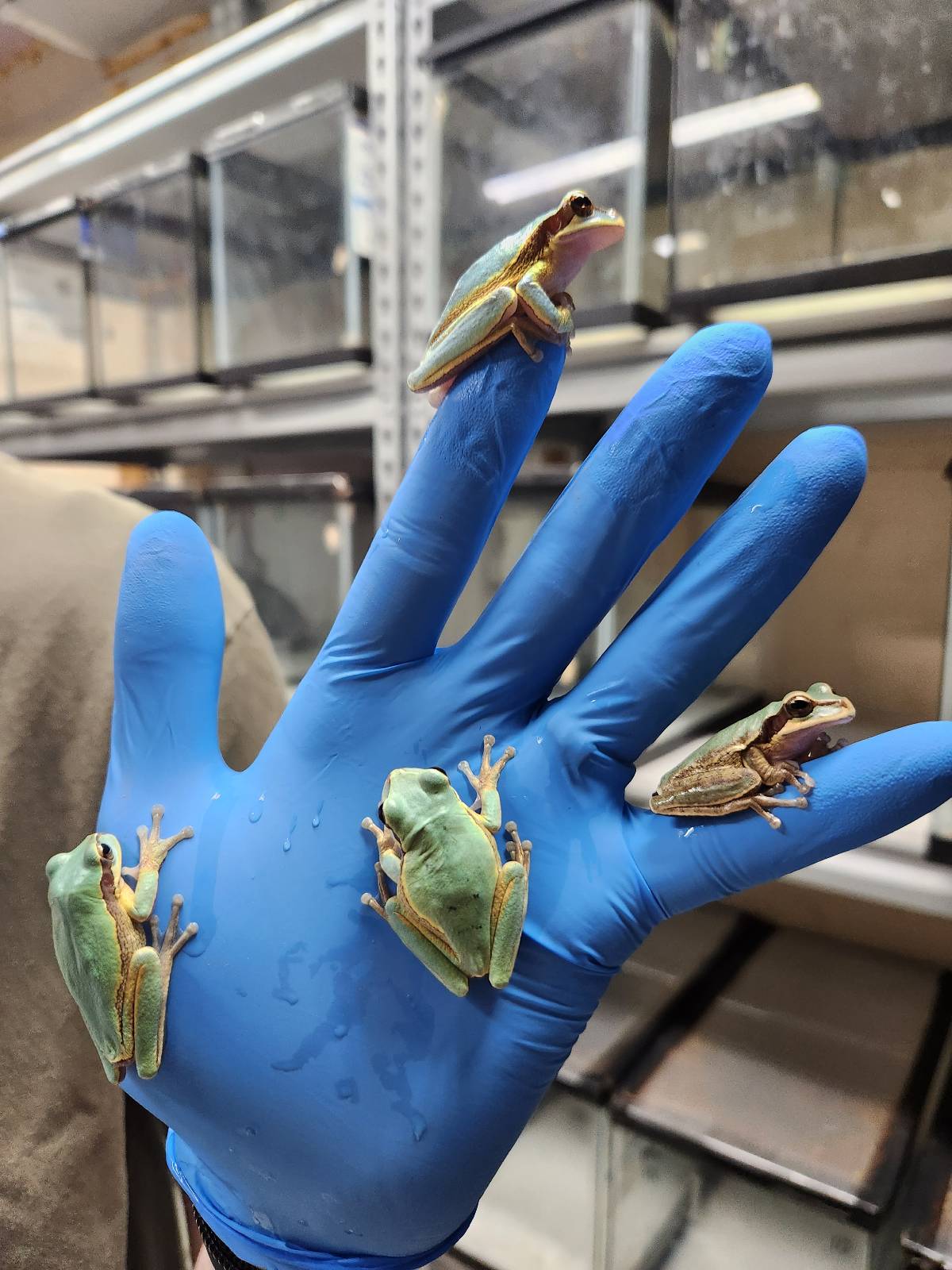
Wearing disposable gloves is one of the easiest ways to protect your frogs from chytrid and other diseases. Other benefits include protecting frogs' sensitive skin and keeping your hands clean!
However unpleasant it is to consider, there may come a time when you are no longer able to care for your pet. Unfortunately, the greatest source of spillover is releasing pets into the wild. This is never the right thing to do. It’s illegal in many places, and for good reason. While you may think that it gives your pet the best chance of survival, the truth is that most pets released into the wild do not survive, and many suffer before they die. Worse still, they may live long enough to hurt native wildlife, either as invasive species, spreaders of disease, or both. If you ever find yourself unable or unwilling to keep your pet, make your best effort to rehome it. The Healthy Trade Institute has resources to help with rehoming, including an adoption program, and there may be other resources available in your area. Don’t Let It Loose offers a database of rehoming resources organized by state.
An animal doesn’t have to be alive to spread disease. In fact, some diseases become most infectious immediately after their host dies. No matter what the cause of death may be, never dispose of a dead animal by simply throwing it outside. The safest disposal method is burial, ideally a foot or more deep. However, this may be prohibited or require a permit in your area, so check your local and state laws first. If burial isn’t an option, double-bag the remains in airtight bags and dispose of them in the regular trash. Either method will significantly reduce, if not eliminate, any chance of disease spillover.
Conclusion
Chytridiomycosis is a serious disease that has devastated amphibians all over the world. However, it is not a death sentence for infected frogs, nor is it shameful to detect chytrid in your frogs. Since chytrid is now found nearly everywhere frogs are found, it’s possible for any keeper to encounter it at any point in their amphibian-keeping journey, and increasingly likely the longer you work with these animals. As responsible amphibian hobbyists, it’s important that we all understand the basics of chytrid identification, treatment, and prevention. Armed with this knowledge, we can all play our part in stopping the spread, and building a healthy, sustainable hobby for generations to come.
Links of interest
Topics in this Blog
1-800-691-8178

Our Team
Josh's Frogs ©2020 - 2026 by Josh's Frogs, LLC.