

Josh's Frogs
Why you should buy from us
Green Keel-Bellied Lizard - Gastropholis prasina (Captive Bred)
Green Keel-Bellied Lizard - Gastropholis prasina (Captive Bred)
$119.99
About This Product
Check out our Podcast on Keel-Bellied Lizards!
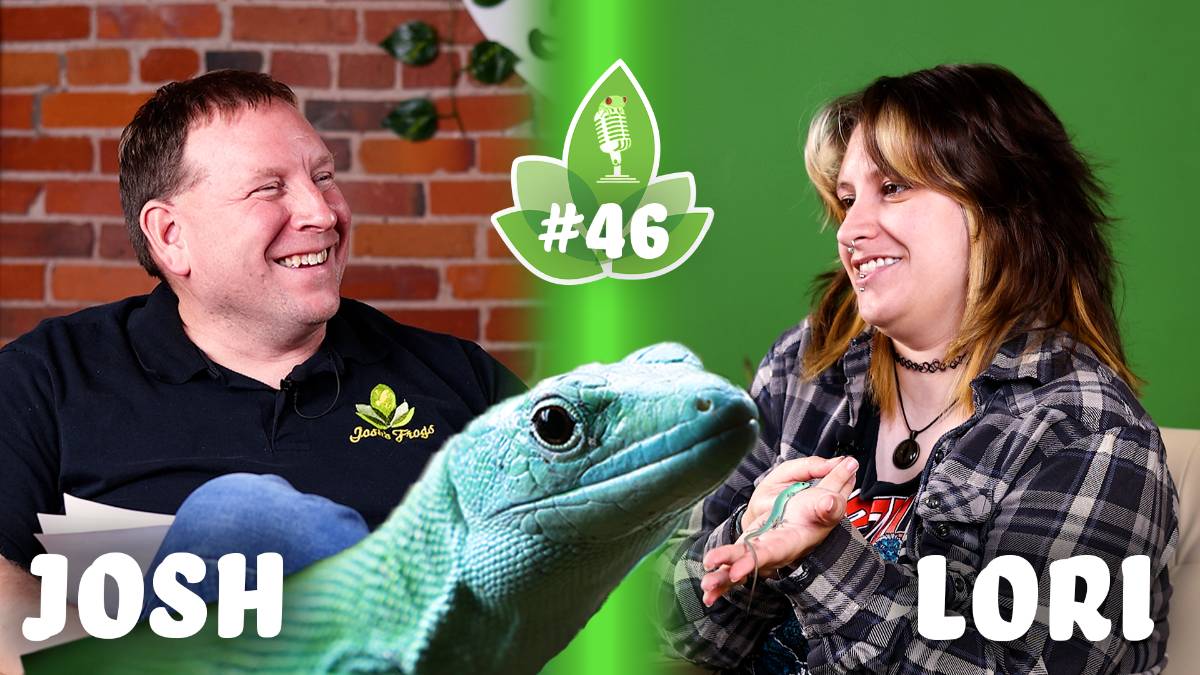
Defining Characteristics:
- Beautiful green coloration
- Diurnal
- Long prehensile tails
- Active and curious lizard
- Keeled scales
Name: The bright green color and keeled scales of the Gastropholis prasina give credence to their common name: the green keel-bellied lizard. This mostly arboreal species from the coastal forests of Mozambique, Tanzania, and Kenya, has a very impressively long prehensile tail.
Recommended Enclosure Size: A single adult animal should be kept in at least a 18x18x24 enclosure. Pairs have been successfully kept and bred in this size as well, but would benefit from something larger such as a 36x18x36 terrarium.
A bioactive setup with live plants is strongly recommended for this species; BioBedding is recommended to maintain live plants, springtails, and isopods. These arboreal lizards should be provided plenty of hiding spots along with ample horizontal and vertical climbing material. Large cork bark flats and tubes, live oak, manzanita, and other branches will all be appreciated by this very active species.
Temperature: Keep green keel-bellied lizards between 72-80 F. A basking spot of around 90-95 F should be provided. Temperature should be monitored with a digital thermometer, and hot spot can be checked with an infrared thermometer or temperature gun. Night temperatures should not fall below 68 F. These diurnal lizards should also be provided with a 5.0 or similar strength UVB light..
Humidity: Humidity is very important to this lizard and should be provided a humid setup between 60-70%. A well-ventilated enclosure should still be used while maintaining higher humidity. Plants can be added to help stabilize higher humidity as well as provide humid microclimates. Ambient humidity should be monitored with a digital hygrometer. Green keel-bellied lizards should be misted daily if not multiple times per day to provide and maintain this high humidity and to provide dew on enclosure walls and cage items from which they can drink. A shallow water dish should also be provided.
Size: Green keel-bellied lizards are a long and slender lizard with impressively long prehensile tails. As adults, they can range between 10-16 inches long with tails. Hatchlings are around 3 to 5 inches.
Age: Green keel-bellied lizards are at least 4 weeks old when sold by Josh’s Frogs, at which time they are well established. It is estimated that these lizards live for around 10-15 years in captivity.
Feeding: Green keel-bellied lizards are insectivores. In captivity, they will thrive on a diet of daily feeder insects. Hatchlings and juveniles are large enough to take ⅛” crickets, or even ¼” crickets, and hydei fruit flies. As they get older, they can be moved to ½” and ¾” crickets. Other appropriately sized feeder insects, like dubia roaches, waxworms, and black soldier fly larvae, can also be occasionally offered but need to be provided in a food dish to be accessible. Feeder insects should be gutloaded and dusted with a calcium and multivitamin supplement. Individuals may also occasionally take fruit gecko diet mix, though this should be offered as a treat and not as a staple.
Sexing: Compared to females, males will develop far more exaggerated pores with age.
Color/Pattern:: This species exhibits a very bright green color; however, stressed out individuals will take on darker shades of green with bluish tints. The scales on its back are small, smooth and green, whereas the scales on its belly are yellow-green and keeled.
Social Behavior:: This lizard species is best housed as a pair or solo. Aggression can occur between males, females, or between a male and female, and individuals should be separated if any signs of bullying persist.
Breeding: You will want to cycle them according to their natural habitat where it is hot and wet in the spring and then cooler and dryer conditions in the summer. They are egg gluers and generally will attach their eggs in tubes of cork. They can lay egg clutches up to 12, but typically they range from 6-8. They don’t lay monthly or on a regular basis. Eggs should be removed and incubated on a 1:1 mix of vermiculite and water or moist sphagnum moss at around 78 degrees.
Natural Range:: These lizards are endemic to the coastal forests of Mozambique, Tanzania and Kenya.
History in the Hobby:: Likened to a small version of a green tree monitor, this charismatic, active species is becoming more and more popular in captivity, though it remains fairly rare. Captive breeding efforts have removed the need to take this species from the wild.
Still not sure if the green keel-bellied lizard from Josh's Frogs is the right pet for you? Read the reviews below and see what other customers are saying!
Shipping
After placing an order containing a live animal, you will receive a scheduling email containing our JotForm scheduling link to schedule your new pet's delivery date.
With this scheduling link, you will be able to schedule your order's delivery up to 30 days in advance. You will be able to choose a date of delivery for Tuesday-Saturday (Saturday arrival depends on the carrier's service availability) with the estimated time of arrival generally being 12pm, or 4:30pm for more rural areas. Overnight lows must be above 40°F to ship directly to you (or above 30°F for FedEx Ship Center/UPS Customer Center pickups) as well as below 90°F by estimated time of arrival.
If you require further assistance, or prefer to talk to one of our Customer Service agents, please feel free to reach out to our [email protected] email or our phone line 1-800-691-8178.
Import/export restrictions on this product require that it can only be shipped to destinations within the United States.
Restrictions on this product that prohibit shipping to the following states: HI.




Customer Reviews
Based on 3 reviews
Review data
5 star reviews
- 100%
4 star reviews
- 0%
3 star reviews
- 0%
2 star reviews
- 0%
1 star reviews
- 0%
Reviews
Dana
Things I've learned in the first two weeks of having a green keel bellied lizard
First an foremost, I love my little guy. He's a delight, super active, and always interested in what's going on outside of the tank. I was a little bit hesitant to get him, due to the lack of knowledge about this species in captivity. If, like me, you were put off by the lack of care information, don't be! Josh's Frogs' care guide is quite accurate. Here's a few things I would add: -They might take a while to eat when you first get them. My little guy, Chip, took a whole week and a half before he felt comfortable enough to eat. -Josh's frogs undoubtedly have their babies on a misting system, because the minute mine turns on, he runs up to get a drink. -They love to climb on textured backgrounds and through plants! I have a gorilla glue + sand + coco fiber background, and Chip has no trouble navigating it. -They are good at hiding if they want to be, but still the most gregarious lizard I've ever met. -Mine is terrified of tongs. I thought for a little bit that he was scared of me, but after feeding him from my hand, he's perfectly comfortable. I love my keel-bellied lizard so much, and if you're on the fence, don't be. Decidedly the most rewarding reptile experience of my lifetime, and he's only been in my care for two weeks.
Andrew
He is awesome
Arrived very active and healthy. I have had him a couple weeks now and is one of my favorites already. He spends the day alternating between running around and taking naps. He is super agile and will jump and catch himself with his looped tail.
Ann
so fun to watch
My green keelbellied lizard is amazing to watch, he runs, jumps, watches me and my dogs. He is very active. He burrows in the dirt of his bioactive 18x18x24 habitat. He will also arm wave, he is interesting and diurnal, so he is out most of the day. I have seen him hang by his tail, and jump from place to place. He likes a water dish but also licks water from the glass. He eats crickets, dubias and waxworms, several bugs a day. I love to watch him hunt. I use a ledge feeder for dubias and worms, he chases the crickets. He does Not like to handled, but I did get him out by putting a cloth bag over his hide, and prodding him gently until he climbed in. The dark bag was like another place to hide and didnt stress him too much. He is hardy, my mother got sick, I had to leave town, while I was gone his mister broke, caregiver didnt realize it. His humidity tanked for about a week. I took him to the vet, he was ok, but constipated. I was able to soak him in warm water by using the cloth bag to remove him from the tank, then gently shaking him in a Tupperware with holes in the lid, with a couple inches of warm water. He was his old self in a couple days. He has jumped out through the open door of his cage and I had to grab him from the floor, He bit me, but it doesn't really hurt, just pinches fairly hard. He is fast. I am disabled and spend alot of time at home, so I enjoy having him to watch. I am setting up a 2x2x4 foot tall PVC habitat for him, so he has even more room to play. I will then be looking for a female companion for him.
Showing 1 to 3 of 3 results