

Josh's Frogs
Why you should buy from us
Caring for Tree Frog and Toad Tadpoles

Raising tadpoles can be a rewarding experience, especially if you’re preparing for the arrival of tiny tree frogs or toads in your terrarium. Whether you’re a beginner keeper or an experienced herpetoculturist, it’s important to give your tadpoles the best start in life. Here we cover everything you need to know about raising healthy tree frog and toad tadpoles. Caring for dart frog tadpoles is a bit different, and we cover that in a separate guide.
Setting Up the Tadpole Habitat
Tadpoles need a clean, spacious, and stable aquatic environment. Here’s what Josh’s Frogs recommends:
Tank Size & Type
A 10–20 gallon aquarium works well for small batches of tadpoles. Limit 1 to 2 tadpoles per gallon of water. No filtration is necessary, but gentle aeration is beneficial. Avoid strong currents. Tadpoles prefer still or slow-moving water.
Water Parameters
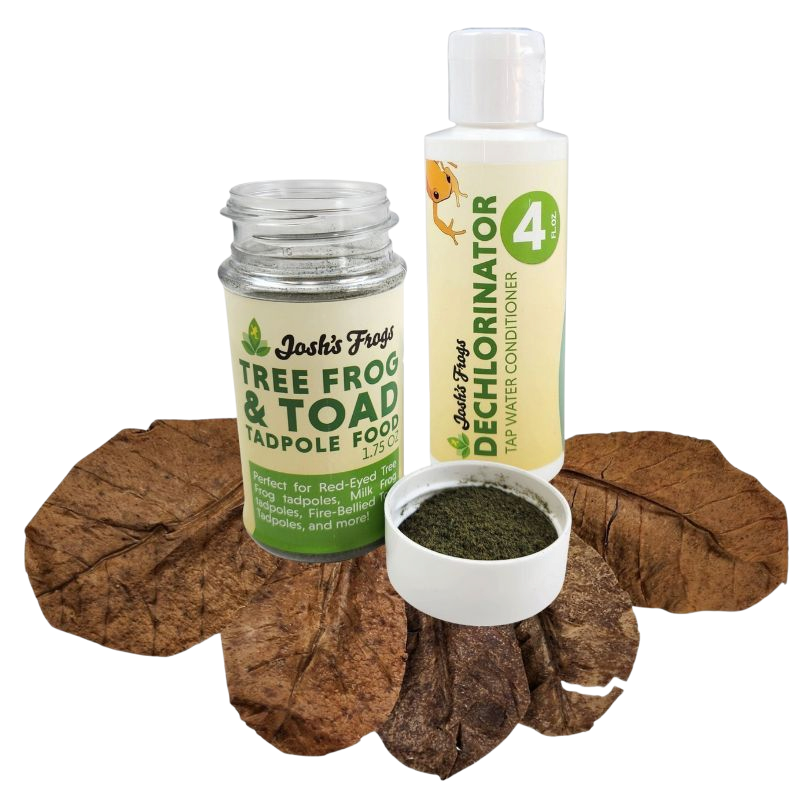
Water temperature should be 72–78°F (22–25.5°C) and pH should be neutral to slightly acidic (6.5–7.5). Room temperature is generally safe for most tadpole species. Use only dechlorinated water—tap water must be treated with Josh’s Frogs Dechlorinator Tap Water Conditioner. To prevent ammonia and toxin buildup, change a quarter to a third of the water every day. Use a turkey baster to remove solid waste and spot-clean as needed.
We recommend turning dechlorinated water into "tadpole tea" by adding Indian Almond Leaves, which soften it, lower its pH, and infuse it with tannins. This more closely replicates the conditions that tadpoles would experience in the wild, where breeding pools are often full of fallen leaves and other decaying plant matter.
Feeding Tadpoles
Tadpoles have specific dietary needs depending on their stage of development. Feed early stage tadpoles our Josh's Frogs Tree Frog & Toad Tadpole Food 1–2 times a day, removing uneaten food after a few minutes to prevent water fouling. Supplement with with blanched vegetables like spinach, zucchini, and lettuce.
As they grow and develop, some tadpole species will shift from herbivorous to omnivorous. At this point you can introduce protein sources like fish flakes, crushed spirulina pellets, or even small insects (as they near metamorphosis).
Transitioning to Land
Tadpoles go through noticeable changes over time. Keep an eye on their limb development (hind limbs will come first, then front) and decreasing tail length, as they absorb it during transformation. Once front legs appear, tadpoles start absorbing their gills and forming their lungs, so you must ensure they can access air.
When your tadpoles begin metamorphosis, it’s time to prep for a semi-terrestrial setup. Provide sloped rocks, cork bark, or floating platforms so they can haul out of the water. Once they're out on dry land, move them onto a substrate of moist sphagnum moss or moist paper towel. Both are easy to clean and keep humidity high. Mist daily and maintain temperatures similar to the tadpole stage.
Common Mistakes to Avoid
• Overfeeding – leads to poor water quality and sick tadpoles.
• Poor water maintenance – unclean water is a major cause of tadpole death.
• Skipping dechlorination – chlorine and chloramines can kill tadpoles quickly.
• No land access during morphing – tadpoles will drown if they can’t climb out during metamorphosis.
Final Thoughts
Raising tree frog or toad tadpoles is an amazing way to witness one of nature’s most fascinating transformations. By following Josh’s Frogs guidelines—clean water, proper feeding, and careful monitoring—you can ensure your tadpoles develop into healthy, hopping juveniles. With a bit of patience and care, you’ll be rewarded with thriving frogs or toads, ready for their next stage of life.
Topics in this Blog
-1-a2bf6c72.jpg?width=200)

1-800-691-8178

Our Team
Josh's Frogs ©2020 - 2026 by Josh's Frogs, LLC.