

Josh's Frogs
Why you should buy from us
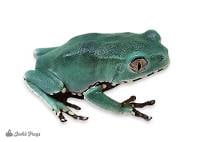
Breeding Phyllomedusa bicolor, the Giant Waxy Monkey Tree Frog
This blog contains photographs and written material originally published in June of 2023.
Giant Waxy Monkey Tree Frogs, Phyllomedusa bicolor, are a pretty big deal here at Josh’s Frogs, in more ways than one. Of course, they’re literally quite big. With some populations growing up to six inches long (although our Peruvian line is a bit smaller), they’re among the biggest tree frogs in the world. But their sheer size is dwarfed by a greater significance. In our hobby, these frogs are highly prized, very rare, and almost always wild-caught. That’s typical Josh’s Frogs territory, so it seemed like a no-brainer for us to start a breeding program. Now, having finally succeeded after three years of hard effort, we can definitively say that some brains were needed.
As far as we can tell, our hard-earned success at breeding this particular species is unprecedented. That isn’t to say that P. bicolor has never been bred in captivity before. Our own breeding group was captive-bred, and we know of a handful of other examples. The difference with our success comes down to a few key details: our frogs were housed entirely indoors—in the same climate-controlled facility they’ve called home for the last three years—and subjected to conditions designed to mimic the seasonal changes of their native environment.

This process, known as ‘conditioning’ or ‘cycling’, turned out to be a key factor in the P. bicolor reproductive cycle. Though some amphibians will breed readily in captivity without the need for conditioning, many species rely on certain environmental cues to trigger breeding behavior, such as seasonal changes in temperature, humidity, rainfall, or food availability. Some cues are harder than others to replicate in an indoor environment, but without the right ones at the right time, these species won’t attempt to breed. The biggest challenge to successfully breeding P. bicolor was figuring out how to produce the right cues at the right times.
After a whole lot of trial and error, it seems that we’ve finally dialed in the proper cycle, and it feels like we’ve cracked open a safe or unearthed a priceless treasure. As of writing, we’ve discovered at least five viable egg clutches, and we keep finding more. Each clutch represents hundreds of healthy young frogs, and each frog has the potential to be more than just a pet; it could be a chance for a wild frog to stay wild, and an inspiration to advocate for wild frogs everywhere, whether they’re halfway across the world or right in our backyards. In our opinion, that’s what conservation through captive breeding is all about: fostering a sustainable future for frogs and hobbyists alike. 🐸
Links of Interest

Topics in this Blog
Products in this Blog
1-800-691-8178

Our Team
Josh's Frogs ©2020 - 2026 by Josh's Frogs, LLC.