

Josh's Frogs
Why you should buy from us
BRCS: Minimizing the Overharvesting of Himalayan Stream Frogs in Nepal
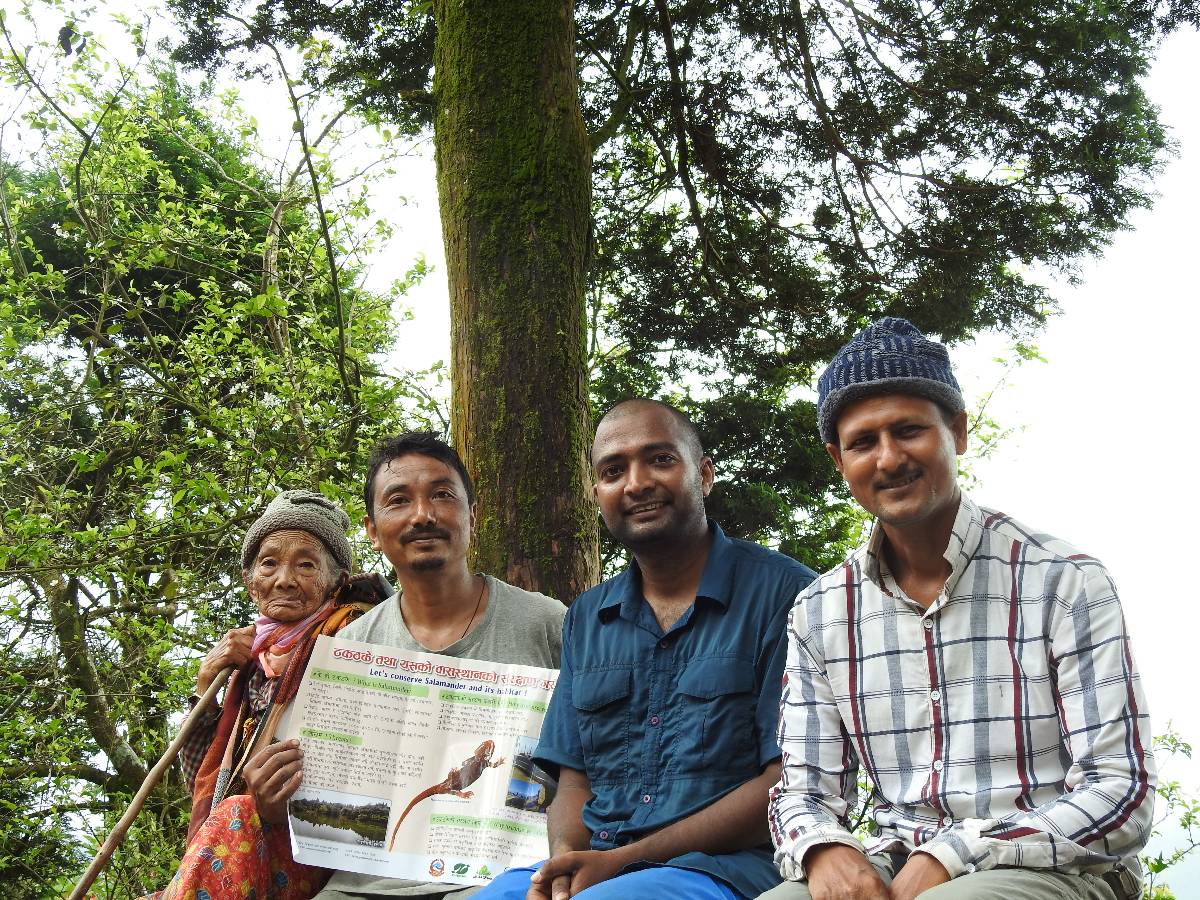
BRCS Field Assistant Dharma Rijal, on right, and Secretary Bivek Gautam, second from right, sit with some conservation-minded locals of Kanyam, Nepal. The poster, which educates locals about the threatened local salamander Tylototriton himalayanus, was produced and distributed by BRCS with help from a 2021 Josh's Frogs Amphibian Conservation Grant.
Josh's Frogs awarded a 2024 Amphibian Conservation Grant of $1,000 to the Nepal-based organization Biodiversity Research and Conservation Society (BRCS) for their project Minimizing the Overharvesting of Himalayan Stream Frogs in Nepal. To learn more about this project, we did a virtual interview with BRCS Secretary Bivek Gautam.
How do you plan to use the grant money?
The grant money will be used to support our community-based conservation project focusing on Amolops species (Himalayan stream frogs) in Nepal. Specifically, the funds will help us conduct ethnobiological documentation of frog harvesting, organize awareness workshops with the local community and schools, develop and distribute a Conservation poster.
What does winning this grant allow you to do that you might not have otherwise?
Winning this grant empowers us to actively engage with the community in a meaningful way. Without this support, our outreach and awareness-building efforts would have been significantly limited. The grant gives us the resources to document cultural ties to frogs, host workshops, and co-create conservation solutions with indigenous knowledge holders.
When do you expect to see results from this? What are you hoping they look like?
We expect to begin seeing initial outcomes by mid-2025. Indicators of success will include increased awareness among locals, community input on sustainable practices, and a shift in perception toward conservation. In the longer term, we hope to see a reduction in unsustainable harvesting of frogs.
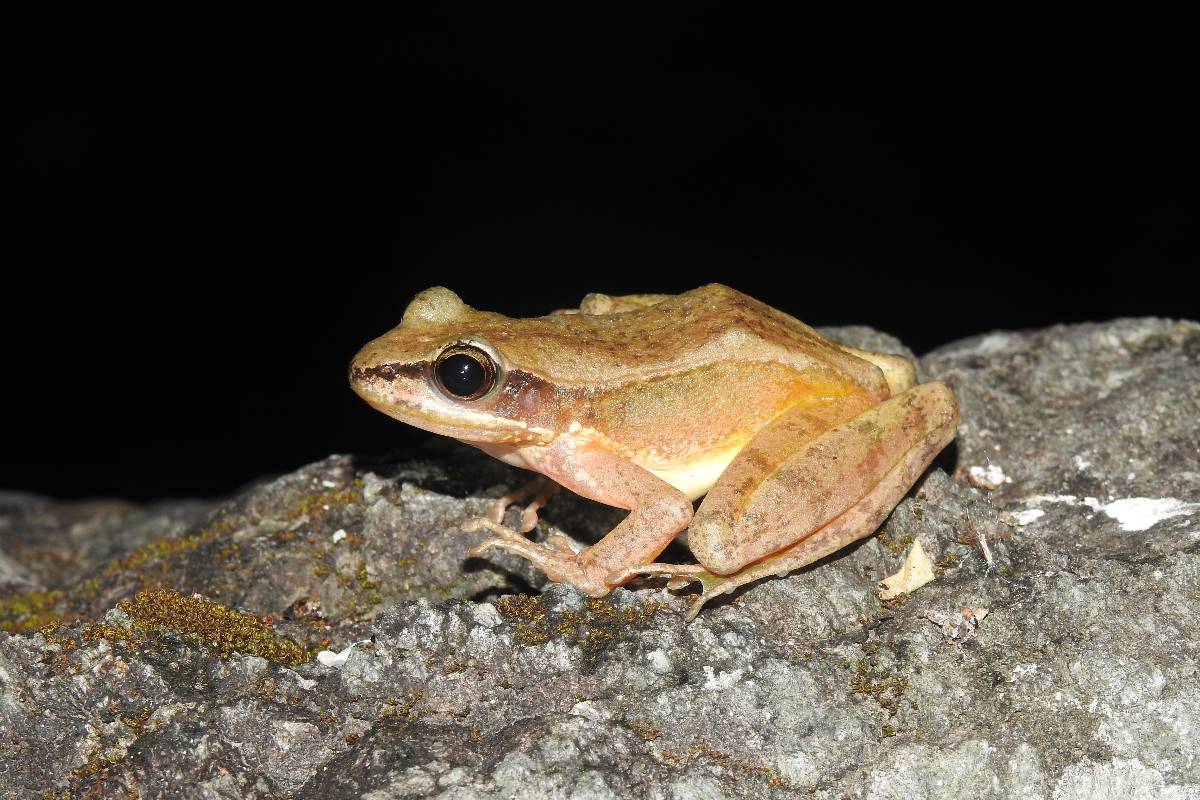
Amolops monticola, one of the project's focus species.
How will your project impact amphibian conservation?
It will reduce unsustainable harvesting of Amolops frogs by promoting community awareness and culturally respectful conservation practices, helping ensure their long-term survival.
What are the greater implications of your work?
This project highlights how conservation efforts can be more impactful when they integrate local culture and traditional knowledge. By working closely with the Limbu community, we aim to create a model for sustainable harvesting that respects indigenous practices while protecting vulnerable amphibian species. This approach could be replicated in other regions facing similar challenges, encouraging more inclusive and community-driven conservation across South Asia and beyond.
What message or information would you like to share with the reptile and amphibian pet community?
We urge the pet community to support conservation not just in captivity, but also in the wild—where these species face multiple threats in nature. Respect for wild populations and sourcing responsibly can play a vital role in long-term amphibian survival.
How can someone donate to your organization?
Interested supporters can reach out to us via our organization’s Facebook page or email us directly. We have kept bank details for those who are willing to support amphibian conservation at a grassroot level, information for donation is available in our website. You can also directly contact me for coordination.
Where can readers learn more about your project?
We regularly post updates on our organization’s Facebook page. A project summary will also be available on our website. Additionally, publications and outcomes will be shared via scientific journals after completion of project.
Topics in this Blog
1-800-691-8178

Our Team
Josh's Frogs ©2020 - 2026 by Josh's Frogs, LLC.